
Most American homes rely on HVAC systems to provide comfort and healthy air year-round. With over 90 percent of American households using some type of heating or cooling equipment, knowing the basics can save you money and prevent common problems. This guide cuts through confusing terminology so you can understand how HVAC systems work, make smarter decisions about upgrades, and keep your indoor environment safe and efficient.
Table of Contents
- What HVAC Means and Core Industry Terms
- Common HVAC System Types and Components
- Understanding Efficiency Ratings and Measurements
- Key Maintenance and Service Terms
- Common HVAC Misconceptions and Mistakes
Key Takeaways
| Point | Details |
|---|---|
| Understanding HVAC | HVAC stands for Heating, Ventilation, and Air Conditioning, essential for indoor comfort, air quality, and energy efficiency. |
| System Maintenance | Regular professional maintenance is crucial to ensuring HVAC systems operate efficiently and last longer, preventing unexpected breakdowns. |
| Efficiency Ratings | Familiarity with efficiency ratings like SEER and EER helps consumers make informed decisions that save on energy costs and reduce environmental impact. |
| Common Myths | Misconceptions about HVAC operation, such as the effectiveness of closing vents or frequent temperature changes, can lead to increased energy costs and system damage. |
What HVAC Means and Core Industry Terms
HVAC is an acronym that stands for Heating, Ventilation, and Air Conditioning – the comprehensive system responsible for creating comfortable indoor environments. When you break down the term, each letter represents a critical function: heating keeps spaces warm during cold months, ventilation ensures air circulation and quality, and air conditioning cools and dehumidifies indoor spaces during warmer periods.
Understanding core HVAC components is essential for homeowners and property managers. Key system components like air conditioners, heat pumps, and furnaces work together to maintain optimal temperature and air quality. Air handlers distribute conditioned air through ductwork, while heat pumps can both heat and cool spaces by transferring thermal energy. Furnaces generate heat by burning fuel or using electrical resistance, providing warmth during winter months.
The primary goals of HVAC systems extend beyond simple temperature control. These sophisticated systems manage indoor air quality, humidity levels, and energy efficiency. Modern HVAC technologies incorporate advanced sensors, smart thermostats, and zonal control mechanisms that allow precise temperature management. Homeowners can now monitor and adjust their systems remotely, optimizing comfort while reducing energy consumption. When considering HVAC maintenance agreements, regular professional service ensures these complex systems operate at peak performance, preventing unexpected breakdowns and extending equipment lifespan.
Common HVAC System Types and Components
HVAC systems are diverse and designed to meet varying heating and cooling needs for different spaces. Split systems represent one of the most common configurations, where indoor and outdoor units work together to manage temperature and air quality. These systems typically consist of a central air conditioner or heat pump connected to an indoor air handler, allowing flexible installation in residential and commercial settings.
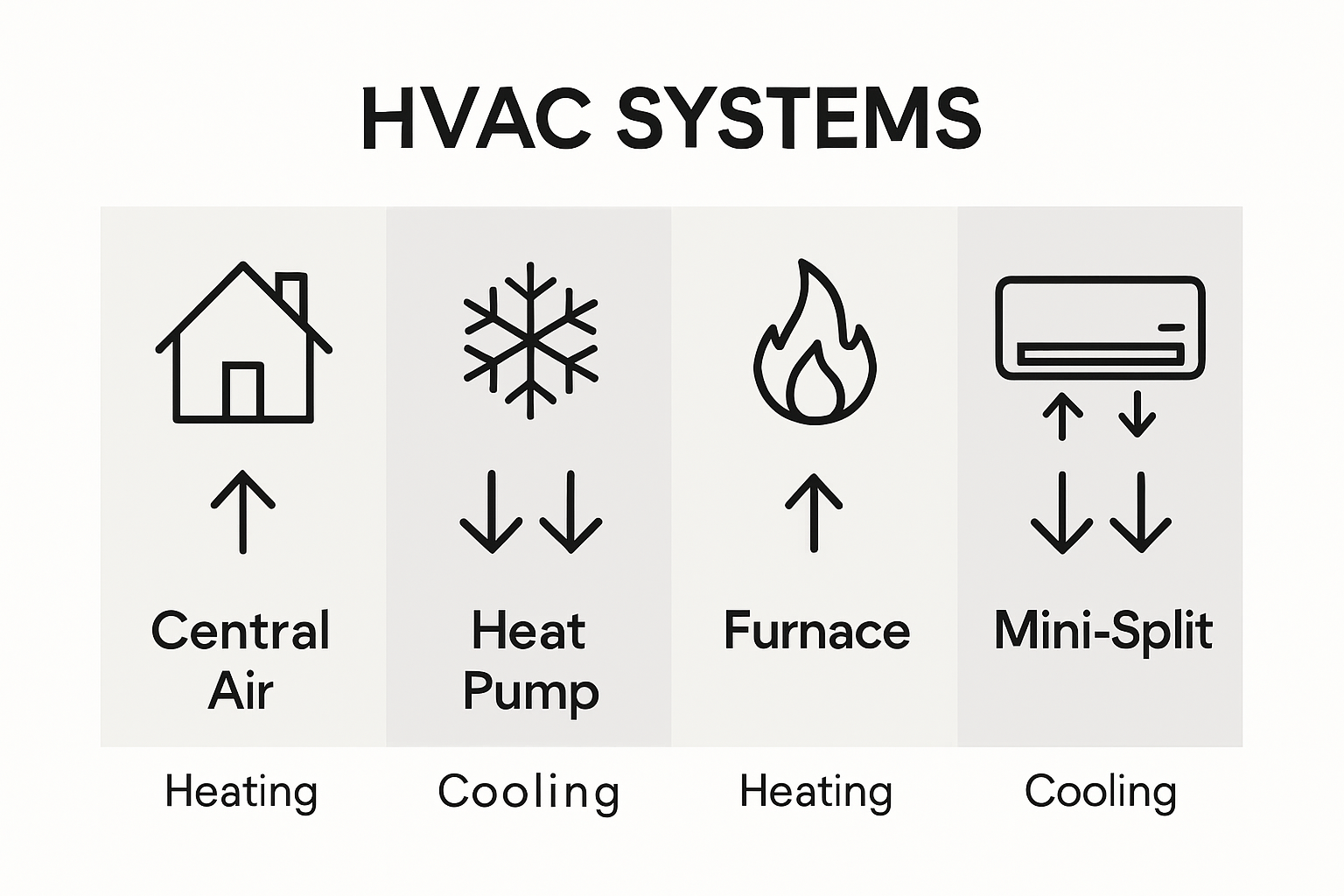
The primary HVAC system types include central air conditioning, heat pumps, furnaces, and ductless mini-split systems. Central air conditioners use a compressor and refrigerant to cool indoor spaces, while heat pumps can provide both heating and cooling by transferring thermal energy between indoor and outdoor environments. Furnaces generate heat through combustion or electrical resistance, making them crucial for maintaining warmth during colder months. Ductless mini-split systems offer targeted climate control for spaces where traditional ductwork is impractical or impossible.
Each HVAC system comprises several key components that work in concert to regulate indoor climate. Compressors circulate refrigerant, condensers release heat, evaporator coils absorb thermal energy, and air handlers distribute conditioned air throughout a building. Modern systems increasingly incorporate smart technologies like programmable thermostats, zone control mechanisms, and advanced sensors that optimize energy efficiency and provide precise temperature management. When selecting an HVAC system, factors such as square footage, local climate, building insulation, and energy efficiency ratings play critical roles in determining the most suitable solution for residential or commercial spaces.
Understanding Efficiency Ratings and Measurements
Efficiency ratings are critical metrics that help homeowners and professionals evaluate the performance and energy consumption of HVAC systems. Energy efficiency metrics like EER (Energy Efficiency Ratio) provide crucial insights into how effectively heating and cooling systems convert electrical energy into thermal output. The higher the EER rating, the more efficient the system, which translates directly into lower utility costs and reduced environmental impact.
Two primary efficiency measurements dominate HVAC performance evaluations: SEER (Seasonal Energy Efficiency Ratio) and EER. SEER calculates a system’s cooling efficiency over an entire cooling season, accounting for varying temperature conditions, while EER measures efficiency at a specific temperature point. For heating systems, the Coefficient of Performance (COP) represents another key metric, indicating how much heating or cooling is produced per unit of electrical energy consumed. Modern high-efficiency systems typically feature SEER ratings between 14 and 22, with top-tier models reaching even higher performance levels.
Understanding these efficiency ratings empowers consumers to make informed decisions about HVAC investments. Factors like climate, home insulation, system age, and usage patterns all influence overall energy performance. Newer systems with advanced technologies often provide significant energy savings compared to older models, potentially offsetting their initial installation costs through reduced monthly utility expenses. Homeowners should consider not just the upfront price, but the long-term economic and environmental benefits of choosing a high-efficiency HVAC system that matches their specific residential or commercial needs.
Key Maintenance and Service Terms
Maintaining an HVAC system requires understanding a range of specialized service terms that describe critical preservation and repair processes. Professional maintenance involves several key procedures like refrigerant recharge, coil cleaning, and comprehensive system inspections, each targeting specific aspects of system performance and longevity. Refrigerant recharge involves replenishing the system’s cooling agent to ensure optimal heat transfer and efficiency, while coil cleaning removes accumulated dirt and debris that can impair heat exchange capabilities.
Technical maintenance terminology encompasses diagnostic and preventative processes crucial for system health. Tune-up refers to a comprehensive system evaluation where technicians inspect electrical connections, lubricate moving parts, check refrigerant levels, and test overall system performance. Calibration involves precisely adjusting system controls and sensors to maintain accurate temperature and humidity regulation. Diagnostic testing uses specialized equipment to identify potential issues before they develop into major mechanical failures, allowing homeowners to address minor problems proactively and avoid costly emergency repairs.
Seasonal maintenance terms reflect the cyclical nature of HVAC system care. Winter preparation typically involves inspecting heating components, cleaning furnace elements, and ensuring proper insulation, while summer readiness focuses on air conditioning system performance, checking compressor functionality, and verifying refrigerant levels. Homeowners should understand terms like preventative maintenance, which involves regular scheduled services designed to extend equipment life, improve energy efficiency, and minimize unexpected breakdowns. Professional HVAC technicians recommend comprehensive annual or bi-annual inspections to keep systems running smoothly and prevent potential performance issues.
Common HVAC Misconceptions and Mistakes
HVAC systems are complex, and misinformation can lead homeowners to make costly errors that compromise system efficiency and performance. Common misconceptions about energy savings and system operation can significantly impact overall HVAC functionality, leading to unnecessary expenses and potential equipment damage. One prevalent myth is that closing vents in unused rooms will reduce energy consumption, when in reality, this practice can increase system strain and potentially damage ductwork by creating dangerous pressure imbalances.
Thermostat management represents another area rife with misunderstandings. Many homeowners believe constantly changing temperature settings saves energy, but this approach actually forces the system to work harder and consume more electricity. Extreme temperature adjustments can cause the HVAC system to run longer and less efficiently, increasing wear on mechanical components. Similarly, neglecting regular maintenance is a critical mistake. Homeowners can prevent major issues by following essential maintenance steps that protect system longevity and performance.
Additional misconceptions include believing that larger HVAC systems automatically provide better cooling, when properly sized equipment is actually more important for efficient operation. Oversized units cycle on and off frequently, causing unnecessary wear and reducing overall system efficiency. Another common error is ignoring air filter replacement, which can lead to reduced air quality, increased energy consumption, and potential system failure. Homeowners should understand that HVAC systems require consistent care, professional inspections, and proactive maintenance to ensure optimal performance, energy efficiency, and long-term reliability.
Understand HVAC With Confidence and Reliable Local Support
Navigating HVAC terminology can feel overwhelming but understanding key terms like refrigerant recharge, SEER ratings, and ductless mini-splits empowers you to make the best choices for your home or business. If you want to ensure your system runs efficiently and avoid costly mistakes, expert guidance and professional service are essential. MD Heating & Air Conditioning in Greenville, SC offers clear explanations and dependable solutions to help you improve comfort while managing energy costs. Explore valuable tips and heating service details through MD Heating & Air: Heating Services & Maintenance Tips.

Don’t let technical jargon hold you back from optimal indoor comfort. Visit MD Heating & Air today for a free estimate or consultation. Whether you need installation, repair, or routine maintenance, our local experts are ready to provide fast, trusted service backed by community reputation. Take control of your HVAC needs now and secure peace of mind with the right knowledge and support.
Frequently Asked Questions
What does HVAC stand for?
HVAC stands for Heating, Ventilation, and Air Conditioning, which refers to the system responsible for maintaining comfortable indoor environments.
What are the common types of HVAC systems?
The common types of HVAC systems include central air conditioning, heat pumps, furnaces, and ductless mini-split systems, each designed to meet various heating and cooling needs.
How can I improve the energy efficiency of my HVAC system?
You can improve energy efficiency by selecting high-efficiency units, scheduling regular maintenance, changing air filters, and utilizing smart thermostats for better control.
What are the key components of HVAC systems?
Key components of HVAC systems include compressors, condensers, evaporator coils, air handlers, and thermostats, all of which work together to regulate indoor climate.