Over 80 percent of American households rely on HVAC systems to maintain comfortable indoor air year round. However, even a well-designed system cannot perform its best without regular care. Small oversights like forgetting to swap out an air filter or ignoring dirty vents directly affect both air quality and energy bills. Discover expert-backed ways to keep your American home’s HVAC running efficiently and your air clean all season.
Table of Contents
- Inspect And Replace Air Filters Regularly
- Clean And Clear HVAC Vents And Registers
- Check Thermostat Settings For Accuracy
- Examine And Clean Condenser And Evaporator Coils
- Test System Controls And Safety Features
- Review Refrigerant Levels And Check For Leaks
- Schedule Professional HVAC Inspection Annually
Quick Summary
| Key Point | Explanation |
|---|---|
| 1. Regularly Replace Air Filters | Change air filters every 90 days to maintain air quality and system efficiency. More frequent changes are needed for homes with pets or allergies. |
| 2. Clean HVAC Vents Quarterly | Regularly clean vents and registers every 3-6 months to prevent dust circulation and improve airflow. Consider more frequent cleaning in dusty homes. |
| 3. Verify Thermostat Accuracy | Check your thermostat settings quarterly to ensure accurate temperature readings and optimize energy efficiency for savings. |
| 4. Schedule Annual Professional Inspections | An annual professional HVAC inspection can catch potential issues early, ensuring system performance and prolonging its lifespan. |
| 5. Maintain Refrigerant Levels | Regularly check refrigerant levels and signs of leaks to prevent system strain and increased energy costs. Professional help is advised for leak repairs. |
1. Inspect and Replace Air Filters Regularly
Air filters are the unsung heroes of your HVAC system, acting as the primary defense against dust, allergens, and airborne particles that can compromise your indoor air quality. Regularly inspecting and replacing these filters is not just a maintenance task but a critical strategy for preserving your system’s performance and your home’s air health.
The Environmental Protection Agency recommends using high-efficiency filters with a Minimum Efficiency Reporting Value (MERV) of 13 or higher to effectively capture small particles. These advanced filters trap microscopic contaminants like pollen, pet dander, and fine dust that standard filters might miss.
Most residential HVAC systems require filter replacement every 90 days, but homes with pets, smokers, or residents with allergies might need more frequent changes. A simple visual inspection can reveal when a filter is dirty: if it appears gray, clogged, or visibly coated with dust, it is time for a replacement. Waiting too long can restrict airflow, forcing your system to work harder and potentially increasing energy consumption.
Pro Tips for Effective Filter Maintenance:
- Check filters monthly
- Mark your calendar for regular replacement
- Purchase filters in bulk to save money
- Consider your home environment when determining replacement frequency
Properly maintained filters not only improve air quality but also extend your HVAC system’s lifespan and maintain its energy efficiency. By dedicating just a few minutes every few months to this simple task, you can significantly enhance your home’s comfort and your system’s performance.
2. Clean and Clear HVAC Vents and Registers
Your HVAC system’s vents and registers are more than simple metal grates covering openings they are critical pathways for distributing temperature controlled air throughout your home. Keeping these components clean is essential for maintaining optimal system performance and indoor air quality.
Maintaining clean HVAC vents and registers prevents dust, allergens, and debris from circulating through your living spaces. The Environmental Protection Agency emphasizes that dirt and moisture in duct systems can lead to mold growth, which poses significant health risks to you and your family.
Cleaning vents and registers is a straightforward process that can dramatically improve your home’s air circulation. Start by turning off your HVAC system to prevent dust from spreading during cleaning. Use a vacuum with a brush attachment to remove loose dust from vent covers, then wipe them down with a microfiber cloth dampened with a mild cleaning solution.
Practical Cleaning Steps:
- Remove vent covers carefully
- Vacuum interior duct openings
- Wash covers with gentle cleaner
- Dry thoroughly before replacing
- Check for any signs of mold or damage
Professional HVAC technicians recommend performing this maintenance task every three to six months, depending on your home’s environment. Homes with pets, smokers, or located in dusty areas might require more frequent cleaning. By dedicating just 15 to 20 minutes to this task, you can significantly improve your HVAC system’s efficiency and the overall air quality in your living space.
3. Check Thermostat Settings for Accuracy
Your thermostat is the command center of your home’s climate control system, acting as a critical interface between you and your HVAC equipment. A misaligned or inaccurate thermostat can lead to unnecessary energy consumption, uncomfortable temperature fluctuations, and increased wear on your heating and cooling systems.
Professional HVAC guidelines recommend periodic verification of thermostat settings to ensure optimal performance. Modern thermostats can drift from their original calibration over time, causing them to misread actual room temperatures and trigger heating or cooling cycles incorrectly.
Key Verification Steps:
- Compare thermostat reading with a separate indoor thermometer
- Check battery levels in digital thermostats
- Ensure programming matches your current lifestyle
- Clean thermostat sensors to prevent false readings
For smart thermostats, review and update schedules quarterly. Verify that programmed temperatures align with your daily routines optimizing both comfort and energy efficiency. Programmable models can save up to 10% annually on heating and cooling costs when configured correctly.
If you notice consistent temperature discrepancies or unexplained energy bill increases, consider professional calibration. Some HVAC technicians can quickly diagnose and adjust thermostat accuracy, potentially saving you money and extending your system’s operational life.
4. Examine and Clean Condenser and Evaporator Coils
The condenser and evaporator coils are the unsung workhorses of your HVAC system, responsible for transferring heat and maintaining comfortable indoor temperatures. Over time, these critical components accumulate dust, debris, and potential microbial growth that can significantly reduce system efficiency and air quality.
Indoor air quality experts emphasize that moisture and dirt in HVAC systems create prime conditions for mold and bacteria proliferation. The condenser coil outside your home and the evaporator coil inside your air handler are especially vulnerable to performance degradation when not properly maintained.
Cleaning Preparation Steps:
- Turn off power to HVAC system
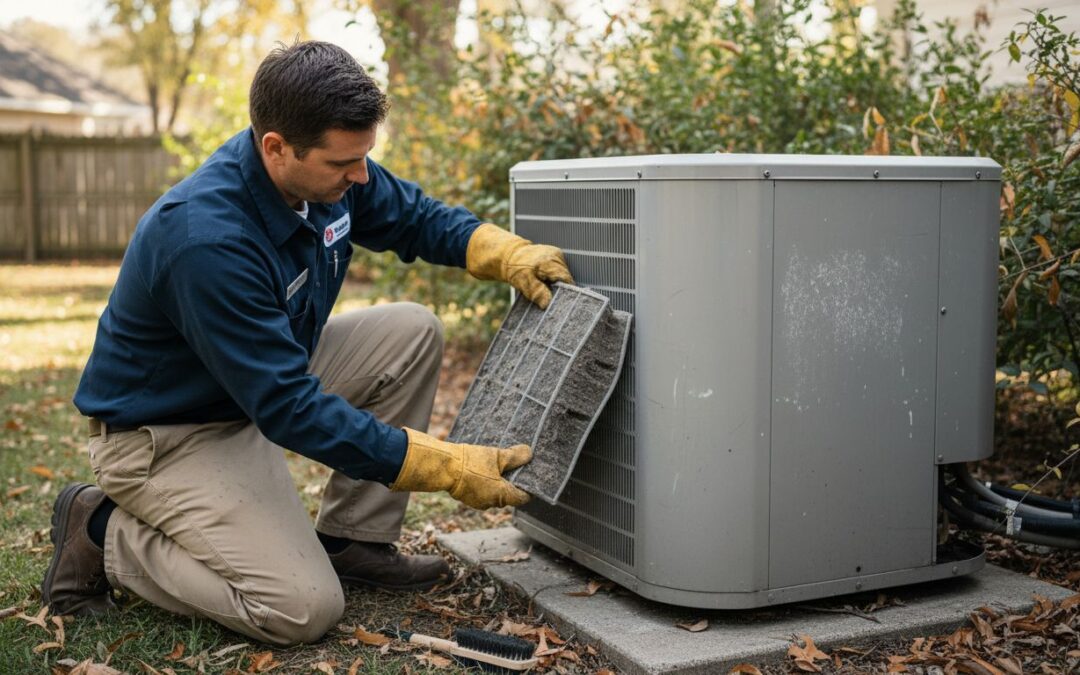
- Remove external debris around outdoor unit
- Use soft brush or specialized coil cleaner
- Gently clean without bending delicate fins
- Rinse thoroughly with low pressure water
Professional maintenance typically involves deep cleaning with specialized solutions that remove microbial buildup and restore optimal heat transfer capabilities. While homeowners can perform basic cleaning, an annual professional inspection ensures thorough maintenance and helps prevent potential system failures. Keeping these coils clean can improve energy efficiency by 10% to 15% and extend your HVAC system’s operational lifespan.
5. Test System Controls and Safety Features
Your HVAC system’s safety controls are its first line of defense against potential malfunctions, protecting both your equipment and your home from unexpected failures. These critical components monitor temperature, pressure, electrical connections, and other essential operational parameters to prevent dangerous situations.
HVAC industry standards emphasize comprehensive testing of system controls as a fundamental maintenance practice. Safety features like limit switches, flame sensors, and pressure relief valves require periodic verification to ensure they function precisely when needed.
Critical Safety Control Checks:
- Verify thermostat response accuracy
- Test emergency shutoff mechanisms
- Check electrical connection integrity
- Inspect pressure and temperature sensors
- Confirm proper sequence of system operations
Homeowners should perform basic visual inspections quarterly, but professional annual assessments provide more comprehensive evaluations. A trained technician can identify subtle signs of wear or miscalibration that might escape an untrained eye. By proactively testing these safety features, you reduce the risk of unexpected breakdowns, potential fire hazards, and costly emergency repairs.
Remember that modern HVAC systems are complex networks of interdependent components. What seems like a minor control issue can quickly escalate into a significant system failure if left unchecked.
6. Review Refrigerant Levels and Check for Leaks
Refrigerant is the lifeblood of your air conditioning system, responsible for absorbing and releasing heat that keeps your home comfortable. Maintaining proper refrigerant levels is not just about performance it is critical for your system’s efficiency, longevity, and environmental responsibility.
HVAC industry standards emphasize the importance of regular refrigerant inspections to prevent potential system failures and environmental damage. Low refrigerant levels can cause your system to work harder, increasing energy consumption and potentially leading to compressor breakdown.
Signs of Refrigerant Issues:
- Reduced cooling performance
- Ice formation on evaporator coils
- Unusual hissing sounds
- Higher than normal energy bills
- Inconsistent indoor temperatures
While homeowners can observe potential symptoms, professional technicians must conduct precise leak detection and refrigerant recharging. Attempting DIY refrigerant management can damage your system and violate environmental regulations. Modern refrigerants are carefully regulated substances that require specialized handling and expertise.
Annual professional inspections can identify potential leaks early, preventing costly repairs and ensuring your HVAC system operates at peak efficiency. Catching and addressing refrigerant issues promptly can save you hundreds of dollars in potential future repair costs.
7. Schedule Professional HVAC Inspection Annually
An annual professional HVAC inspection is like a comprehensive health checkup for your home’s heating and cooling system. Just as you would visit a doctor for preventative care, your HVAC system requires expert evaluation to ensure optimal performance and catch potential issues before they become expensive problems.
Professional heating service recommendations highlight the importance of comprehensive annual inspections that go far beyond what a typical homeowner can perform. Trained technicians use specialized diagnostic tools to assess system components, measure electrical connections, evaluate refrigerant levels, and identify subtle signs of wear that might escape an untrained eye.
What a Professional Inspection Typically Includes:
- Comprehensive system performance assessment
- Detailed electrical connection evaluation
- Lubrication of moving mechanical parts
- Calibration of thermostats and controls
- Efficiency and performance measurements
These annual inspections can help prevent unexpected breakdowns, extend your HVAC system’s lifespan, and maintain energy efficiency. Most manufacturers recommend professional maintenance to keep warranties valid. By investing in a yearly checkup, you could potentially save hundreds of dollars in emergency repair costs and ensure consistent comfort throughout your home.
Below is a comprehensive table summarizing the main strategies for maintaining and optimizing HVAC systems as discussed throughout the article.
| Strategy | Implementation | Benefits |
|---|---|---|
| Inspect and Replace Air Filters | Regularly inspect, buy high-efficiency filters with MERV ≥ 13, replace every 90 days | Improved air quality, enhanced HVAC performance |
| Clean HVAC Vents and Registers | Vacuum and wipe vents every 3-6 months, check for mold | Better air circulation, prevention of mold growth |
| Check Thermostat Settings | Compare with a separate thermometer, verify programming quarterly | Increased energy efficiency, reduced energy costs |
| Clean Coils | Use a soft brush, clean coils annually | Improved system efficiency, extended lifespan |
| Test System Controls | Verify response, test safety features quarterly | Prevention of malfunctions, improved reliability |
| Check Refrigerant Levels | Inspect for leaks annually, avoid DIY handling | Reduced energy usage, prevent compressor failure |
| Schedule Annual Inspections | Hire professionals for comprehensive evaluations | Early issue detection, maintenance of system warranties |
Ensure Your HVAC System Runs Smoothly Year Round with MD Heating & Air
Maintaining your HVAC system involves critical steps like inspecting air filters, cleaning vents, checking thermostat accuracy, and verifying refrigerant levels to avoid costly breakdowns and unhealthy indoor air. If you find these tasks overwhelming or worry about missing something important in your HVAC maintenance checklist, MD Heating & Air is here to help. Our expert technicians specialize in comprehensive heating services and maintenance that protect your home’s comfort and air quality while maximizing energy efficiency.

Don’t let small issues turn into expensive repairs. Visit MD Heating & Air: Heating Services & Maintenance Tips to learn how our local Greenville team ensures thorough inspections and precise adjustments tailored to your home. Take control of your HVAC health today by scheduling a professional tune-up through https://mdheatair.com. Reliable comfort and cleaner air are just a call or click away. Act now to protect your investment and enjoy peace of mind all year long.
Frequently Asked Questions
How often should I inspect and replace air filters in my HVAC system?
Regularly inspect and replace air filters every 90 days. If you have pets or someone in the home has allergies, consider changing the filters more frequently, such as every 30–60 days, to maintain optimal air quality.
What steps should I follow to clean my HVAC vents and registers?
Start by turning off your HVAC system to prevent dust from spreading. Remove the vent covers, vacuum the openings with a brush attachment, and clean the covers with a mild cleaner. Allow them to dry thoroughly before replacing them.
How can I check if my thermostat is accurately reading the temperature?
To verify your thermostat’s accuracy, compare its reading with a separate indoor thermometer. If there are discrepancies, check the thermostat’s battery and clean the sensors to ensure accurate readings.
What are the signs that my HVAC system needs refrigerant recharging?
Common signs include reduced cooling performance, ice formation on the evaporator coils, and unusually high energy bills. If you notice these symptoms, schedule a professional inspection to detect leaks and recharge the refrigerant safely.
Why is scheduling an annual professional HVAC inspection important?
An annual professional inspection is crucial for preventive maintenance, helping to catch potential issues before they escalate. It ensures optimal performance and can save you money on emergency repairs by identifying problems early on.
What should I expect during a professional HVAC inspection?
During a professional HVAC inspection, expect a comprehensive assessment of system performance, evaluation of electrical connections, and a detailed check of refrigerant levels. Technicians will also lubricate moving parts and calibrate controls to maintain efficiency.