Nearly half of all American households rely on heating and cooling systems that are over a decade old, missing out on the comfort and efficiency breakthroughs modern technology offers. Upgrading your HVAC system is a decision that can shape your daily living, help manage utility bills, and boost your home’s value. Discover how recent advancements give American homeowners smarter climate control, better air quality, and significant cost savings throughout every season.
Key Takeaways: HVAC Upgrades for Energy Savings & Value
- What Upgrading Your HVAC System Means
- Types of Modern HVAC Upgrades Available
- How Improved Systems Increase Comfort and Efficiency
- Impact of Upgrades on Energy Costs and Home Value
- Common Pitfalls in Delaying HVAC Replacement
Key Takeaways
| Point | Details |
|---|---|
| Investment in Upgrades | Upgrading your HVAC system is a strategic investment that enhances comfort and energy efficiency in your home. |
| Benefits of Modern Technologies | Advanced HVAC upgrades improve indoor air quality and reduce utility costs through sophisticated technologies. |
| Financial Returns from Upgrades | Modernized systems increase property value and marketability by attracting potential buyers with energy efficiency. |
| Risks of Delaying Replacement | Postponing HVAC replacement can lead to higher energy bills, decreased comfort, and potential health risks. |
What Upgrading Your HVAC System Means
Upgrading your HVAC system is more than just swapping out old equipment – it’s a strategic investment in your home’s comfort, energy efficiency, and long-term performance. Modern HVAC upgrades involve comprehensive improvements that transform how your heating and cooling systems operate, delivering significant benefits beyond basic temperature control.
The upgrade process encompasses multiple sophisticated enhancements, such as installing advanced ventilation technologies that dramatically improve indoor air quality and system efficiency. Key retrofit strategies include integrating air economizers, implementing heat recovery ventilation systems, and introducing building automation technologies that optimize climate control. These upgrades aren’t just cosmetic changes – they represent a fundamental reimagining of how residential climate systems function.
Practical upgrades might include replacing traditional fan motors with electronically commutated motor (ECM) drives, installing programmable smart thermostats, enhancing filtration systems, and comprehensively sealing and insulating ductwork. Each modification contributes to a more responsive, energy-efficient system that reduces utility costs while maintaining superior comfort levels. By strategically upgrading components, homeowners can achieve substantial performance improvements without completely replacing their entire HVAC infrastructure.
Pro Tip: Professional Assessment: Schedule a comprehensive HVAC system evaluation with a certified technician who can provide personalized recommendations tailored to your home’s specific heating and cooling requirements.
Types of Modern HVAC Upgrades Available
Modern HVAC upgrades represent a sophisticated approach to home comfort and energy efficiency, offering homeowners multiple strategies to enhance their climate control systems. These upgrades go far beyond simple equipment replacement, focusing instead on comprehensive improvements that transform how residential heating and cooling systems operate.
One of the most significant upgrade paths involves implementing advanced ventilation and energy management technologies, which can dramatically improve both system performance and indoor air quality. Key upgrade options include installing air economizers that optimize fresh air intake, implementing heat recovery ventilation systems, and integrating building automation technologies that provide precise climate control. These sophisticated systems enable smarter, more responsive temperature management while simultaneously reducing energy consumption.
Deep energy retrofits represent another critical upgrade strategy, encompassing a holistic approach to system improvement. These comprehensive upgrades might include replacing traditional components with high-efficiency alternatives, enhancing insulation, upgrading distribution systems, and installing programmable smart thermostats. Comprehensive building performance improvements can yield substantial energy savings, with some homeowners experiencing significant reductions in utility costs and improved overall system reliability.
Pro Tip: Strategic Consultation: Before investing in HVAC upgrades, schedule a professional energy assessment to identify the most cost-effective improvements tailored to your specific home’s needs and existing infrastructure.
Here is a summary of key modern HVAC upgrade options and their unique benefits:
| Upgrade Type | Core Function | Main Benefit |
|---|---|---|
| Air Economizer | Increases fresh air intake | Improves ventilation |
| Heat Recovery Ventilation | Recovers exhaust heat | Reduces energy waste |
| Smart Thermostat | Automates temperature scheduling | Personalizes comfort, saves energy |
| ECM Motor Upgrade | Uses efficient fan motor technology | Lowers power consumption |
| Duct Sealing & Insulation | Eliminates air leakage | Enhances whole-system efficiency |
How Improved Systems Increase Comfort and Efficiency
Modern HVAC systems represent a quantum leap in home climate control, transforming how we experience indoor comfort through advanced technological innovations. These sophisticated systems go beyond simple temperature regulation, creating environments that adapt intelligently to occupants’ specific needs and preferences while maintaining optimal energy efficiency.

Advanced climate control technologies have revolutionized home comfort by introducing precision temperature management and superior air quality control. Chilled beam systems, for instance, provide remarkably consistent temperature distribution, eliminating hot and cold spots that traditional HVAC systems often struggle to address. By implementing zoned cooling and heating approaches, these systems can maintain different temperatures in various home areas, ensuring personalized comfort for every family member.
Efficiency gains represent another critical advantage of modern HVAC upgrades. New systems incorporate intelligent sensors, variable speed motors, and sophisticated algorithms that continuously optimize energy consumption. These technologies can dramatically reduce utility costs by adjusting output based on real-time environmental conditions, occupancy patterns, and specific temperature requirements. Homeowners can expect significant reductions in energy expenses, with some advanced systems delivering up to 40% improved efficiency compared to decade-old equipment.
Pro Tip: Comfort Calibration: Schedule a professional system assessment annually to fine-tune your HVAC settings, ensuring peak performance and maintaining the delicate balance between maximum comfort and energy efficiency.
Impact of Upgrades on Energy Costs and Home Value
Home HVAC upgrades represent a strategic investment that extends far beyond immediate comfort, delivering substantial financial benefits through enhanced energy efficiency and increased property marketability. Homeowners who prioritize modern climate control systems can expect significant returns both in monthly utility savings and long-term property valuation.
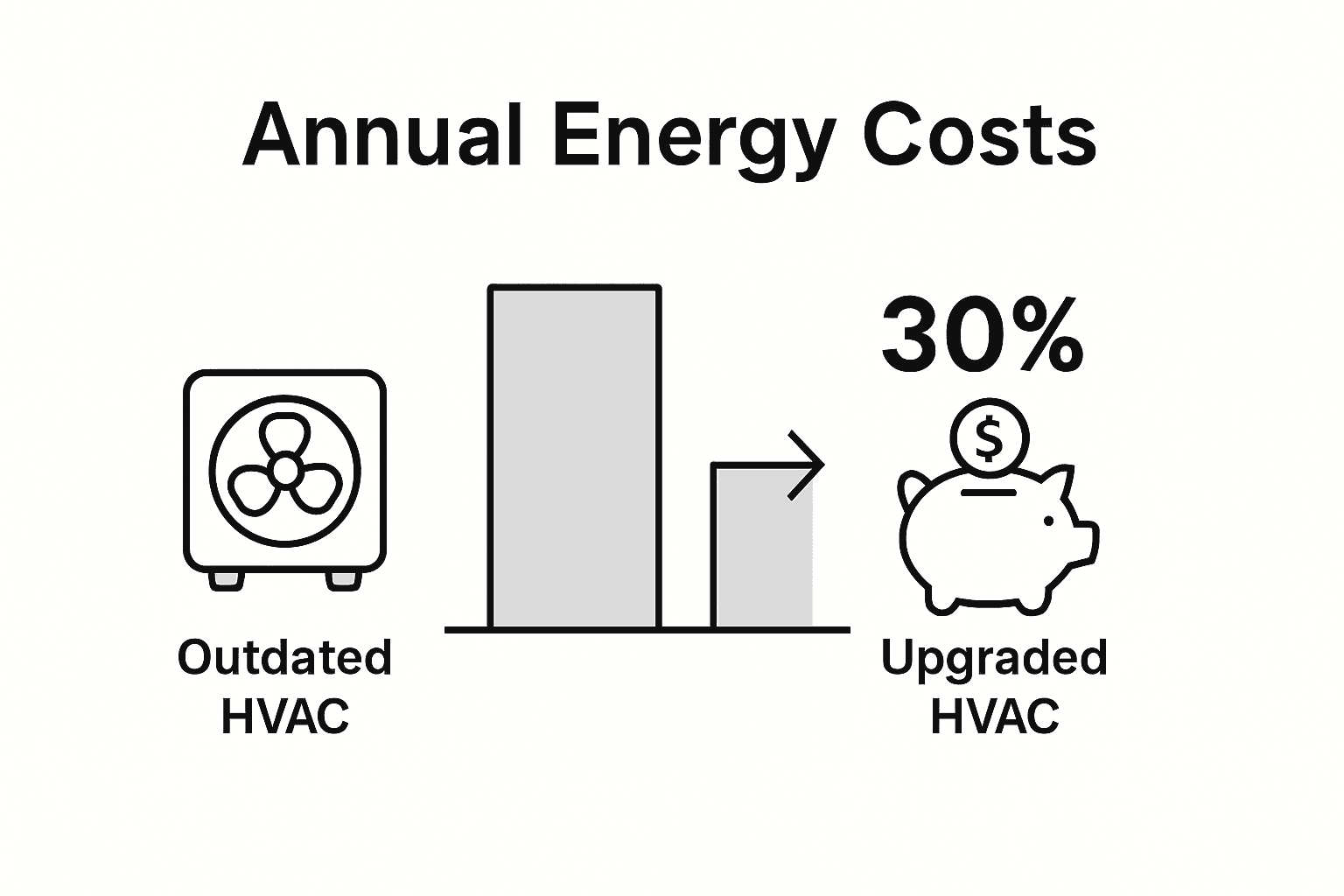
Deep energy retrofits can dramatically transform a property’s economic profile, with potential energy savings reaching 30% or more. These comprehensive upgrades not only reduce operational costs but also substantially increase home market value by improving overall system performance and sustainability. Advanced HVAC technologies enable smarter energy consumption, utilizing intelligent sensors and variable-speed equipment that adapt dynamically to changing environmental conditions and household usage patterns.
The financial impact of HVAC upgrades extends beyond simple energy bill reductions. Potential home buyers increasingly value properties with modern, efficient climate control systems, recognizing them as indicators of proactive maintenance and technological sophistication. Intelligent HVAC controls and high-efficiency equipment can lower energy consumption while simultaneously enhancing a home’s appeal in a competitive real estate market. Prospective buyers often view recent HVAC upgrades as a significant value-add, potentially commanding higher sale prices and shorter market listing times.
Pro Tip: Investment Tracking: Maintain detailed documentation of your HVAC upgrades, including efficiency ratings, installation dates, and performance improvements, to provide tangible proof of value when preparing to sell your home.
Common Pitfalls in Delaying HVAC Replacement
Postponing HVAC system replacement might seem like a cost-saving strategy, but it frequently leads to more expensive complications and significant performance drawbacks. Aging climate control systems gradually deteriorate, creating a cascade of potential problems that can impact both household comfort and financial well-being.
Delaying system replacement can create substantial health and safety risks, as older HVAC equipment struggles to maintain adequate ventilation and temperature control. These compromised systems often produce uneven heating and cooling, generate excessive noise, and become increasingly unreliable. Inefficient older units consume more energy while delivering diminished performance, creating a lose-lose scenario where homeowners pay more for less comfort.
The financial implications of postponing HVAC replacement extend far beyond immediate repair costs. Aging systems experience more frequent breakdowns, requiring progressively expensive emergency repairs that can quickly surpass the cost of a new installation. These units operate with significantly reduced efficiency, leading to higher monthly utility expenses and potential long-term damage to home infrastructure. Moreover, outdated systems often lack modern safety features and environmental controls, potentially exposing residents to indoor air quality issues and unnecessary health risks.
Compare the impact of upgrading vs. delaying HVAC replacements:
| Factor | With Modern Upgrade | With Outdated System |
|---|---|---|
| Utility Bills | Significantly decreased | Continually rising |
| Indoor Air Quality | Consistently improved | Often compromised |
| System Reliability | Fewer breakdowns | Frequent failures |
| Home Value | Enhanced market appeal | Lower resale potential |
| Health & Safety | Modern protections | Increased risk |
Pro Tip: Strategic Planning: Develop a proactive replacement timeline for your HVAC system, typically every 10-15 years, to avoid unexpected failures and maximize your investment in home comfort technology.
Take Control of Your Home Comfort with MD Heating & Air Conditioning
If you are tired of rising energy costs and inconsistent home temperatures caused by an outdated HVAC system it is time to consider a professional upgrade. The article highlights key challenges like inefficient air flow, high utility bills, and compromised indoor air quality all of which MD Heating & Air can expertly address. From modern smart thermostats to duct sealing and advanced ventilation solutions MD Heating & Air offers comprehensive heating services designed to enhance your home’s comfort and efficiency.

Don’t wait for costly breakdowns or unhealthy air to impact your family’s well-being. Visit MD Heating & Air: Heating Services & Maintenance Tips to explore tailored HVAC options and get expert advice. Act now to secure a free estimate through MD Heating & Air Conditioning, where local Greenville expertise meets rapid, reliable service. Your home deserves better comfort and savings today.
Frequently Asked Questions
What are the main benefits of upgrading my HVAC system?
Upgrading your HVAC system can lead to improved comfort, enhanced energy efficiency, lower utility bills, and increased home value. Modern systems offer better air quality, precise climate control, and advanced technology that can adapt to your specific needs.
How much energy can I save by upgrading my HVAC system?
Many modern HVAC upgrades can yield energy savings of up to 30% or more compared to older systems. Advanced technologies, such as variable speed motors and smart thermostats, optimize energy usage based on real-time conditions and occupancy patterns.
What types of upgrades should I consider for my HVAC system?
Consider implementing air economizers for better ventilation, heat recovery ventilation systems to retain heated air, and smart thermostats for automated temperature control. Additionally, upgrading to electronically commutated motors (ECMs) and sealing ductwork can improve overall efficiency.
How can I ensure my upgraded HVAC system operates efficiently?
Regular maintenance, such as annual system assessments and recalibration of your HVAC settings, can help ensure your upgraded system operates at peak performance. Addressing any issues promptly and keeping filters clean are also essential for maintaining efficiency.