Greenville, SC AC Installation for Efficient Home Cooling
A correctly installed air conditioner keeps Greenville houses comfortable during long, humid summers, protects your equipment investment, and helps lower monthly energy costs. This guide walks through what professional AC installation looks like in Greenville, how certified technicians size and place equipment, which system types fit different homes, and what to expect during and after the job. Homeowners often see high energy bills, uneven cooling, and frequent repairs when systems are sized or installed incorrectly; professional installation fixes those problems by matching equipment, ductwork, and controls to your home’s needs. Throughout this article we explain central air, ductless mini-splits, and heat pump options, give a step‑by‑step look at the installation process, outline realistic cost drivers and financing choices, and answer the common questions homeowners ask so you can decide with confidence.
Why hire professional AC installation experts in Greenville, SC?
Hiring pros for AC installation in Greenville means work done to code, accurate system sizing, and performance tuned for comfort and lower operating costs over the long run. Certified technicians handle refrigerant, electrical connections, and required permits—reducing the chance of failures and keeping manufacturer warranties valid. Proper installation prevents short cycling, poor humidity control, and excess noise, which leads to fewer service calls and longer equipment life. A trained local team also factors in Greenville’s hot, humid summers when choosing equipment and dehumidification strategies.
When installers follow industry best practices and documented procedures, homeowners see the most value. The next section shows the specific advantages NATE-certified technicians bring to an install.
What does NATE certification add to an AC installation?
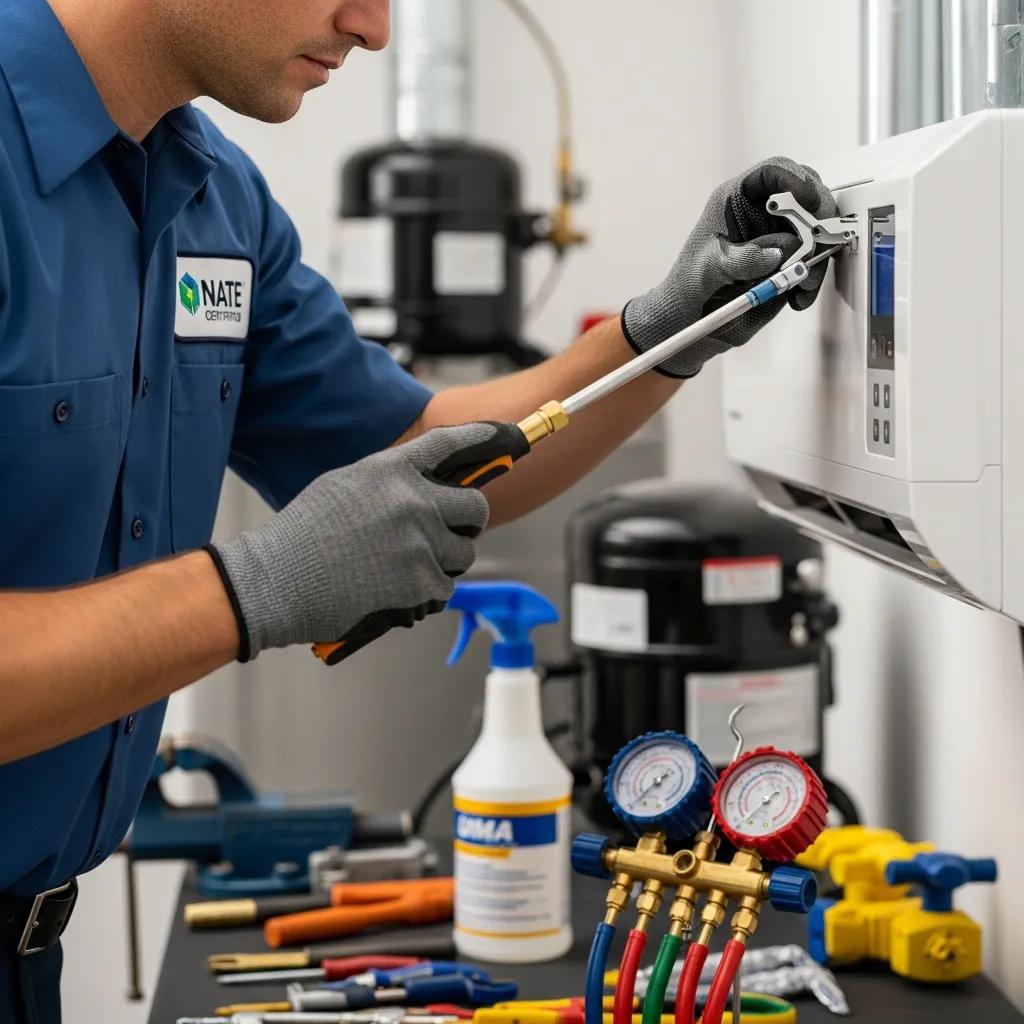
NATE-certified technicians have proven skills across HVAC installation and service tasks, which improves first‑time accuracy and cuts the chance of post‑install issues. Certification reflects success on standardized exams covering load calculations, controls, refrigerant handling, and safety—skills that matter for efficiency and reliability. In practice, NATE-certified installers are more likely to size systems correctly, wire controls properly, and finish a thorough commissioning process that verifies performance before they leave. That attention to detail lowers operating costs, improves comfort, and helps protect warranty coverage, giving homeowners real peace of mind.
Certification also signals ongoing training, which helps technicians keep up with high‑efficiency equipment and smart control options. The next subsection explains how local experience further improves installation outcomes.
How does local expertise improve your installation experience?

Local experience matters because Greenville’s climate, common home styles, and permitting rules create specific challenges that out‑of‑area crews may miss. Technicians who work in the area regularly understand typical duct layouts, insulation levels, and humidity needs—helping them run more accurate Manual J calculations and pick the right system. Local teams also navigate permits and inspections more efficiently and usually provide faster follow‑up service. When certification and local knowledge come together, you get an installation that’s both technically correct and tuned to our climate.
The next section compares the system types most homeowners choose.
Which AC systems work best for Greenville homes?
Greenville homeowners commonly choose between central air systems, ductless mini‑splits, and heat pumps. Each has trade‑offs in upfront cost, efficiency, and zoning flexibility. Central air pairs with existing ductwork for whole‑house cooling and fits many single‑family homes. Ductless mini‑splits offer room‑by‑room control without ducts, a good option for additions or older houses. Heat pumps deliver efficient year‑round heating and cooling for many local homes, combining both functions in one system to improve seasonal energy performance.
The table below compares these system types across attributes that matter for Greenville homeowners.
Which system suits you depends on your home layout, existing ductwork, and priorities like zoning or year‑round efficiency. The next three subsections detail the advantages of each option.
Advantages of central air conditioning installation
Central air delivers consistent whole‑home cooling by circulating conditioned air through ducts and controlling temperature from one thermostat. When sized and installed correctly, central systems provide even temperatures, reliable humidity control, and compatibility with whole‑home filtration and zoning dampers. Choosing a high‑SEER outdoor unit lowers energy use, and integrating with existing heating systems is straightforward. A careful duct inspection during installation prevents efficiency losses from leaks or poor insulation.
Accurate load calculations and attention to duct condition are essential—topics we cover in the installation process section below.
How ductless mini‑splits deliver zoned comfort
Ductless mini‑splits use one outdoor compressor and multiple indoor heads to give room‑by‑room control without new ductwork. That zoning cuts energy waste by cooling only occupied rooms and improves comfort in additions, attics, or older homes that are hard to serve with a central system. Mini‑splits typically offer high SEER ratings and quiet operation, and installation requires small wall penetrations rather than full duct replacement—making them a low‑disruption retrofit option.
Picking the right mini‑split layout starts with a professional assessment of zone loads and control preferences, which we describe in the process section.
Why consider a heat pump for year‑round comfort?
Heat pumps move heat instead of creating it, providing both heating and cooling with strong efficiency in many Greenville applications. Modern heat pumps deliver efficient winter heating and maintain high cooling performance in summer, often lowering overall energy costs compared with separate furnace and AC setups. They can simplify maintenance and equipment footprint, and advanced models with variable‑speed compressors and smart controls help manage humidity better. Homeowners focused on long‑term operating costs and a single‑system solution often choose heat pumps for balanced year‑round comfort.
Understanding local performance helps decide if a heat pump is the right fit; next we walk through the installation process step by step.
How the AC installation process works in Greenville, SC
A professional installation starts with a site consultation, moves to precise sizing, continues with careful installation, and ends with testing and a homeowner walkthrough. The consultation records house size, insulation, window orientation, existing ductwork, and comfort goals—inputs used for a Manual J load calculation and system selection. After equipment selection, installers schedule the job, handle permits, and prepare the site. The physical work covers outdoor condenser placement, indoor air handler setup, refrigerant lines and electrical connections, and any necessary duct modifications. Final commissioning checks refrigerant charge, balances airflow, configures thermostats, and includes an owner walkthrough that demonstrates controls and basic maintenance.
This step‑by‑step approach protects efficiency, warranty, and homeowner expectations. The table below ties installation phases to typical durations and homeowner actions for clarity.
Aligning homeowner preparation with the technician’s workflow reduces surprises on install day. The next subsection outlines what to expect during the actual installation.
What should homeowners expect on installation day?
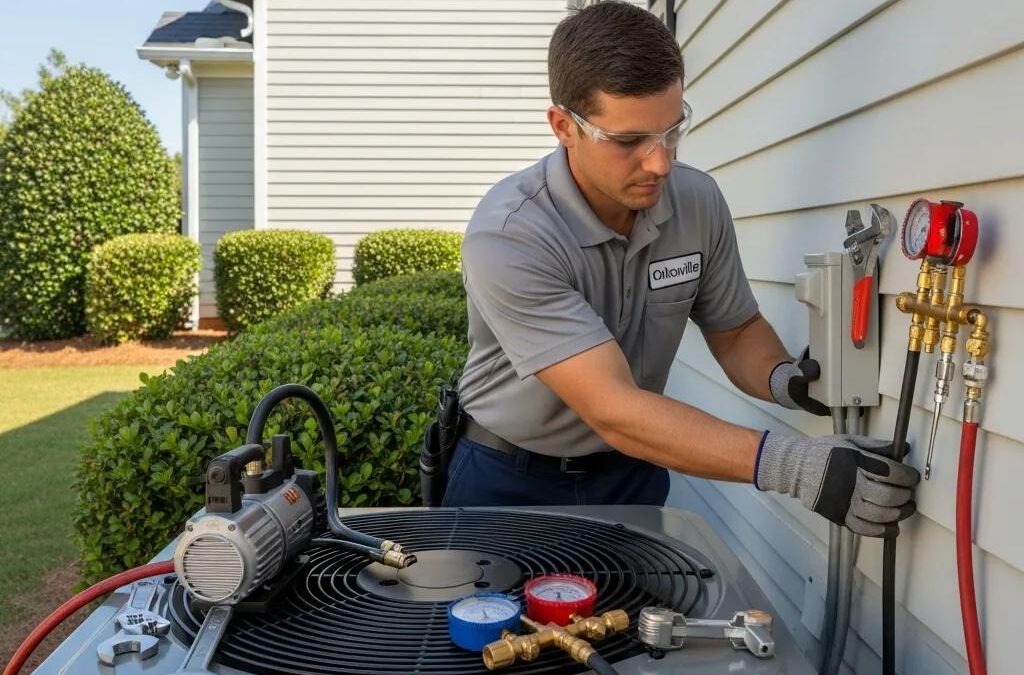
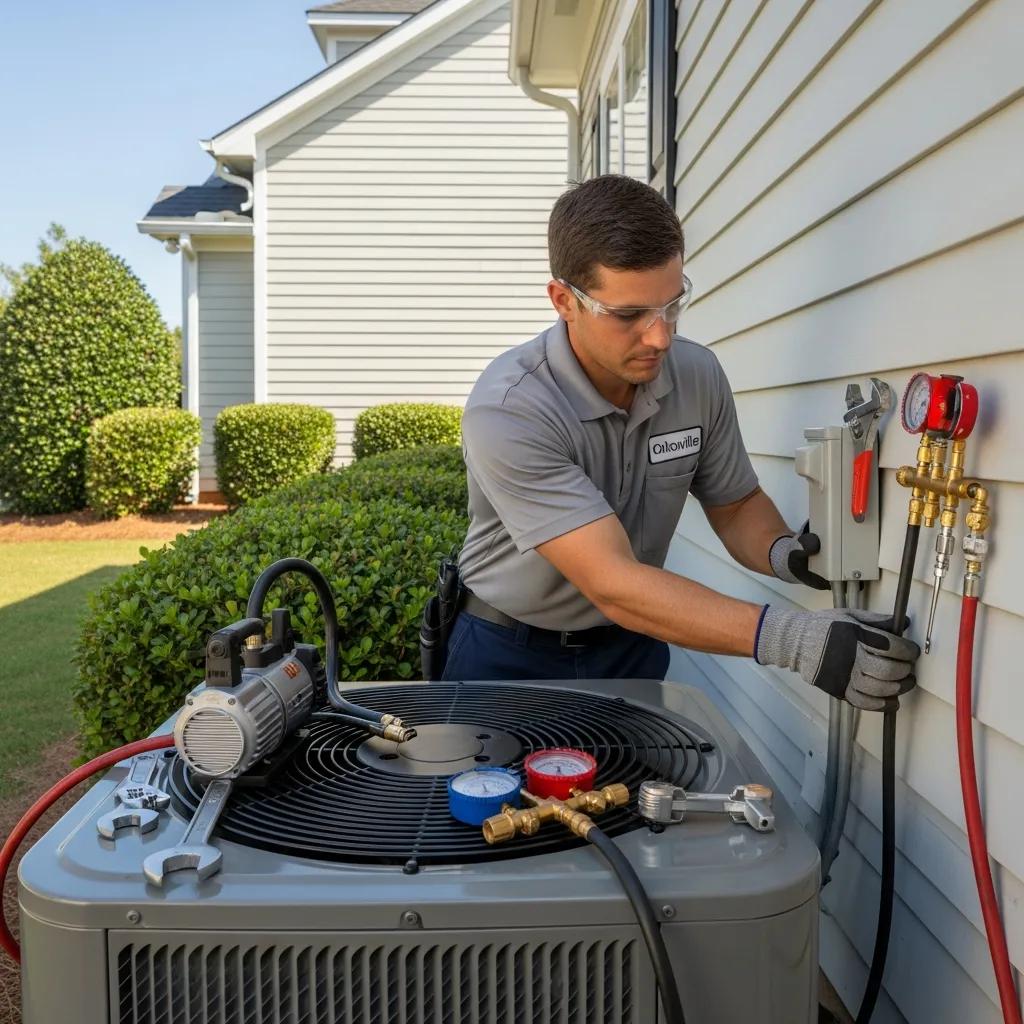
On install day, the crew arrives with tools, protective coverings, and the planned equipment. Work begins with site protection and safety checks before major tasks start. Simple condenser swaps often finish within a business day; full system replacements or ductwork work can take longer. Technicians check electrical capacity, set the outdoor unit on a level pad, connect refrigerant lines and controls, and seal or retrofit ductwork as needed. Cleanup and disposal of the old unit are standard. Final commissioning includes measuring refrigerant charge and airflow, showing thermostat operation, and leaving you with maintenance tips and a filter schedule.
Clear communication throughout the day helps you follow progress. The next subsection explains how proper sizing is determined and why it matters.
How is proper AC sizing determined for Greenville homes?
Proper sizing starts with a Manual J load calculation that estimates heating and cooling needs from home size, insulation, window area and orientation, occupancy, and local climate data for Greenville. Technicians use those inputs to select equipment that matches the calculated BTU load while considering efficiency and part‑load performance. Oversized systems short‑cycle and fail to manage humidity; undersized systems run constantly and struggle to meet set temperatures. Accurate sizing delivers balanced airflow, correct compressor cycling, and effective dehumidification—improvements that increase comfort and reduce long‑term costs.
Research shows a large share of homes have oversized systems, which raises peak energy use and run time compared with properly sized equipment.
Residential AC Capacity and Energy Use Study
Researchers compared installed central air capacities in 368 recently built Florida homes to Manual J load values calculated from audit data. Over half the homes had installed systems larger than 120% of the calculated Manual J value; 31% of the 78 heat pump homes exceeded 120% of their Manual J heating capacity. Submetered data showed higher peak energy use for systems oversized by more than 120% of Manual J. The study illustrates the impact of oversizing on run‑time and energy demand.
What are the key benefits of professional AC installation?
Professional installation delivers measurable benefits: better energy efficiency, improved comfort and humidity control, longer equipment life, and preserved warranty coverage when installations meet manufacturer requirements. Correct installation aligns capacity, ductwork, thermostat placement, and refrigerant charge to create efficient operation and often leads to noticeably lower utility bills compared with poorly installed systems. Professional installs also address airflow balancing and thermostat strategy to eliminate hot and cold spots and stabilize indoor humidity during Greenville’s humid months. Thorough documentation and commissioning protect warranty coverage and simplify future maintenance, adding long‑term value.
Key tangible advantages include:
- Lower Operating Costs: Proper sizing and correct refrigerant charge reduce wasted energy and monthly bills.
- Improved Comfort: Balanced airflow and sensible thermostat placement eliminate uneven temperatures.
- Longer Equipment Life: Correct cycling and commissioning reduce wear and costly repairs.
- Warranty Protection: Many warranties require certified installation and documented commissioning to remain valid.
How does a new AC installation improve energy efficiency?
New installations raise efficiency through higher SEER outdoor units, variable‑speed motors, improved refrigerant controls, and sealed ductwork—changes that cut energy use for the same comfort level. Modern compressors and smart thermostats provide better part‑load performance, which is where most residential systems operate. Proper installation is what lets a home realize those rated efficiencies; poor installation can negate equipment improvements. Commissioning steps like airflow testing and refrigerant verification confirm the system meets design targets and delivers expected savings.
Efficiency gains come from equipment, controls, and quality installation working together—benefits that also improve indoor comfort.
How does professional installation enhance indoor comfort?
Professional installation improves comfort by balancing airflow, placing thermostats where they read accurately, and ensuring proper dehumidification—three factors that create stable indoor conditions during Greenville’s humid season. Duct adjustments or zoning prevent pressure imbalances and noisy, drafty rooms, while correct refrigerant charge and blower settings keep temperature steady and remove excess moisture. These practices reduce nuisance calls and let occupants enjoy the full benefits of modern HVAC systems.
With benefits in mind, cost and financing are often the next questions homeowners have; the section below covers that.
How much does AC installation cost in Greenville, SC, and what financing is available?
Cost varies with equipment type, efficiency rating, labor complexity, ductwork condition, and permit fees—so pricing can range widely for Greenville homeowners. Replacing only an outdoor condenser and matching coil for an existing ducted system is usually less expensive than a full replacement that includes a new air handler, ducts, and thermostat upgrades. High‑efficiency equipment and added features—variable‑speed compressors, zoning, enhanced filtration—raise upfront cost but can lower operating expenses over time. Flexible financing and special offers let homeowners spread the investment and often make higher‑efficiency choices affordable.
The table below summarizes major cost drivers and how financing can fit different scenarios.
Knowing the cost drivers helps you compare realistic scenarios. The next subsection lists the main variables that influence price.
What factors influence AC installation cost?
Costs depend on equipment brand and efficiency, the scope of ductwork work, any electrical upgrades, local permit and inspection fees, and installation access. Replacing an outdoor unit alone is typically less expensive than replacing both indoor and outdoor components or installing new ducts. Adding zoning or advanced controls increases labor and materials. Homes with small electrical panels may need upgrades to support new compressor loads, adding both time and cost. An on‑site assessment gives the accurate details needed for a tailored estimate.
Many homeowners use financing to manage upfront costs; the next subsection explains how flexible financing can help.
How can flexible financing help Greenville homeowners afford new AC systems?
Financing lets homeowners spread the upfront cost into monthly payments, often enabling selection of higher‑efficiency equipment that reduces operating expenses over time. Options include fixed‑rate installment plans, promotional 0% interest offers, and longer loans that lower monthly payments but extend payback. Financing can match your cash‑flow needs and allow immediate replacement when a system fails—avoiding deferred repairs that raise energy bills or trigger emergency calls. Ask for a personalized estimate and pre‑approval so you can compare lifecycle costs of equipment alongside financing terms to find the most economical path.
That financial context leads into the common homeowner questions covered in the final section.
Common questions about AC installation in Greenville, SC
Homeowners often ask about installation time, warranty coverage, who performs the work, and why hiring a local, family‑owned company matters for follow‑up service and responsiveness. Clear answers remove decision barriers by setting realistic expectations for timing, cost, and post‑installation care. The FAQ below gives concise guidance on timing, maintenance, and choosing a local installer.
How long does a typical AC installation take?
Times depend on the scope. A simple condenser or coil swap is often completed in a single business day. A full system replacement with air handler swaps, ductwork changes, or electrical upgrades may take one to several days. Factors that affect duration include crew size, permits or inspections, and the need for duct sealing or air balancing. Preparing the home—clearing access, securing pets, and making utility panels accessible—helps the crew work efficiently. Your installer should give a clear timeline after the on‑site assessment.
Final timing depends on the site assessment that defines scope and constraints. The next subsection explains why local, family‑owned providers are often the best choice.
Why choose a local, family‑owned HVAC company?
Local, family‑owned HVAC companies offer accountability, community reputation, and typically faster emergency response—important when cooling fails during Greenville’s hottest days. Local firms build long‑term relationships through follow‑ups and responsiveness, and family‑owned operations often emphasize treating customers like neighbors. Local technicians know Greenville codes and climate, which smooths permits and inspections. Positive local reviews and demonstrated service history are useful trust signals when selecting an installer.
MD Heating and Air Conditioning is a family‑owned company serving Greenville County and nearby areas. We prioritize dedication, skill, and integrity, employ NATE‑certified technicians, offer 24/7 emergency service, and provide flexible financing. Ready to move forward? We offer a free on‑site estimate and consultation to review options, explain financing, and outline a clear installation timeline.
- Request a personalized estimate: Schedule an on‑site assessment for accurate costs and recommendations.
- Ask about certification: Confirm technicians are NATE‑certified to protect installation quality and warranty compliance.
- Review financing options: Explore payment plans that fit your budget without sacrificing efficiency.
These steps simplify the process and connect you with local expertise that supports long‑term comfort and efficiency.
Frequently Asked Questions
What maintenance is required after AC installation?
After installation, routine maintenance keeps performance high and prevents costly repairs. Schedule a professional inspection at least once a year to check refrigerant levels, clean coils, and verify system efficiency. Change or clean air filters every 1–3 months to maintain airflow and indoor air quality. Keep the outdoor unit free of debris and ensure proper drainage. Following these practices helps maintain efficiency and extend equipment life.
How can I improve the energy efficiency of my new AC system?
Maximize efficiency by using a programmable or smart thermostat, sealing duct leaks, and improving insulation where needed. Set thermostat preferences sensibly (for many homes, around 75°F during the day is a good starting point), and follow regular maintenance like filter and coil cleaning. These steps, combined with correctly sized equipment and good installation, will keep energy use lower.
What should I do if my AC system is not cooling effectively?
First check the thermostat (set to cooling at your target temperature) and inspect the air filter—dirty filters restrict airflow and reduce cooling. Make sure the outdoor unit is clear of obstructions. If problems persist, contact a professional technician to check refrigerant levels, the compressor, and airflow issues.
Are there any warranties associated with new AC installations?
Yes. New systems typically include manufacturer warranties on the equipment—often 5–10 years depending on brand and model—and many installers offer a labor warranty for a specified period. Keep warranty paperwork and installation documentation; many manufacturers require certified installation and commissioning to maintain full warranty coverage.
How can I choose the right size AC system for my home?
Choosing the right size requires a Manual J load calculation that accounts for home size, insulation, window orientation, and local climate. Oversized systems short‑cycle and struggle with humidity; undersized units run constantly and may not reach set temperatures. A certified HVAC technician can perform the calculation and recommend a system matched to your home.
What financing options are available for AC installation?
Many companies offer financing to spread the cost of a new system. Options include fixed‑rate installment plans, promotional 0% offers, and longer‑term loans that lower monthly payments. Some programs specifically support high‑efficiency upgrades. Discuss available plans with your installer to find terms that fit your budget.
Conclusion
Professional AC installation in Greenville, SC gives you better comfort, improved efficiency, and long‑term savings. Working with certified technicians who know local conditions helps you avoid common mistakes and get a system tailored to your home. Don’t wait for the heat—request a free estimate and let our team walk you through the options and timeline.