
Over one third of American homeowners experience unexpected HVAC breakdowns each year, often facing bills that climb into the thousands. For families trying to balance monthly expenses, this can create real stress. Understanding how HVAC financing works offers a practical way to manage costs without draining your savings. This guide explains the financing options available to American households, so you can make informed choices and keep your home comfortable year round.
Essential HVAC Financing Takeaways for Greenville Homeowners
- What Is HVAC Financing and How It Works
- Types of HVAC Financing Options Available
- Eligibility Criteria and Application Process
- Benefits and Drawbacks for Property Owners
- Common Pitfalls and Smart Alternatives
Key Takeaways
| Point | Details |
|---|---|
| HVAC Financing Options | Homeowners have multiple financing options such as personal loans, home equity loans, and manufacturer financing to manage heating and cooling system costs. |
| Importance of Credit Preparation | Checking and improving your credit score before applying can enhance your chances of securing favorable loan terms. |
| Evaluate Costs vs. Benefits | Before finalizing financing, calculate total costs, including interest, to ensure it aligns with potential energy savings and system efficiency. |
| Common Mistakes to Avoid | Avoid over-borrowing and always compare multiple financing offers to find the best deal tailored to your needs. |
What Is HVAC Financing and How It Works
HVAC financing provides homeowners with flexible solutions to manage the significant costs associated with heating, cooling, and ventilation system installations or replacements. When unexpected system failures occur or energy efficiency upgrades become necessary, financing options help spread out expenses over manageable monthly payments.
Typically, HVAC financing includes several primary approaches that accommodate different financial situations. These options range from personal loans and manufacturer financing programs to home equity lines of credit and specialized credit cards designed specifically for home improvement expenses. Each financing method comes with unique advantages – some offer low introductory interest rates, while others provide longer repayment terms or require minimal upfront costs.
The most common financing approaches include:
- Personal Loans: Unsecured options with fixed interest rates
- Home Equity Loans: Lower interest rates using home as collateral
- Manufacturer Financing: Direct programs from HVAC equipment manufacturers
- Credit Cards: Flexible short-term financing with potential rewards
Pro Tip: Research Multiple Options: Before selecting an HVAC financing method, compare at least three different programs, examining interest rates, repayment terms, and potential penalties to find the most cost-effective solution for your specific financial situation.
Types of HVAC Financing Options Available
Homeowners in Greenville seeking HVAC system upgrades have multiple financing strategies to manage installation and replacement costs. Different financing options provide unique advantages for various financial situations, allowing residents to select approaches that best match their budget and credit profile.
The primary HVAC financing methods include personal loans, home equity financing, manufacturer programs, and specialized credit solutions. Personal Loans typically offer fixed interest rates and predictable monthly payments, making budgeting straightforward. Home Equity Loans leverage existing home value, often providing lower interest rates but requiring homeowners to use their property as collateral. HVAC company financing and 0% APR credit cards represent alternative approaches that can provide additional flexibility for qualified applicants.
Detailed financing options break down as follows:
Here’s a side-by-side comparison of key HVAC financing options to help you assess which best fits your needs:
| Financing Option | Typical Loan Amounts | Ideal Applicant Profile | Notable Considerations |
|---|---|---|---|
| Personal Loans | $1,000 to $50,000 | Good credit, stable income | Unsecured, higher rates possible |
| Home Equity Loans | $10,000 and up | High home equity, strong credit | Home as collateral, longer process |
| Manufacturer Programs | Varies by equipment | Buyers of new systems, seeking deals | Limited to specific brands |
| Specialized Credit | Up to personal limit | Good to excellent credit, flexible needs | Intro APR, may revert to high rate |
- Personal Loans
- Unsecured financing
- Fixed interest rates
- No home equity requirement
- Home Equity Loans/Lines of Credit
- Lower interest rates
- Longer repayment terms
- Uses home as collateral
- Manufacturer Financing
- Direct equipment manufacturer programs
- Potential promotional rates
- Streamlined application process
- Credit Card Financing
- Short-term financing options
- Potential rewards points
- 0% introductory APR opportunities
Pro Tip: Credit Check Preparation: Before applying for HVAC financing, obtain a free credit report and address any discrepancies to improve your approval odds and potentially secure more favorable interest rates.
Eligibility Criteria and Application Process
Navigating HVAC financing requires understanding the specific eligibility requirements and documentation needed for successful approval. Homeowners must carefully prepare their financial profile and documentation to increase their chances of securing favorable financing terms.
The primary eligibility criteria typically involve credit score, income verification, and debt-to-income ratio. Credit Score plays a critical role, with most lenders preferring scores above 650 for competitive rates. Income Requirements usually mandate stable employment and verifiable annual earnings that demonstrate ability to repay the loan. Lenders will typically request:
- Proof of income (recent pay stubs, tax returns)
- Employment verification
- Current credit report
- Detailed information about existing debts
- Specific HVAC project cost estimates
The application process generally follows these structured steps:
- Obtain detailed HVAC system cost estimate
- Check and potentially improve credit score
- Gather necessary financial documentation
- Pre-qualify with multiple lenders
- Compare loan terms and interest rates
- Submit formal loan application
- Await loan approval and funding
Pro Tip: Documentation Readiness: Compile all financial documents in advance, including tax returns, pay stubs, and bank statements, to streamline the HVAC financing application process and demonstrate financial preparedness to potential lenders.
Benefits and Drawbacks for Property Owners
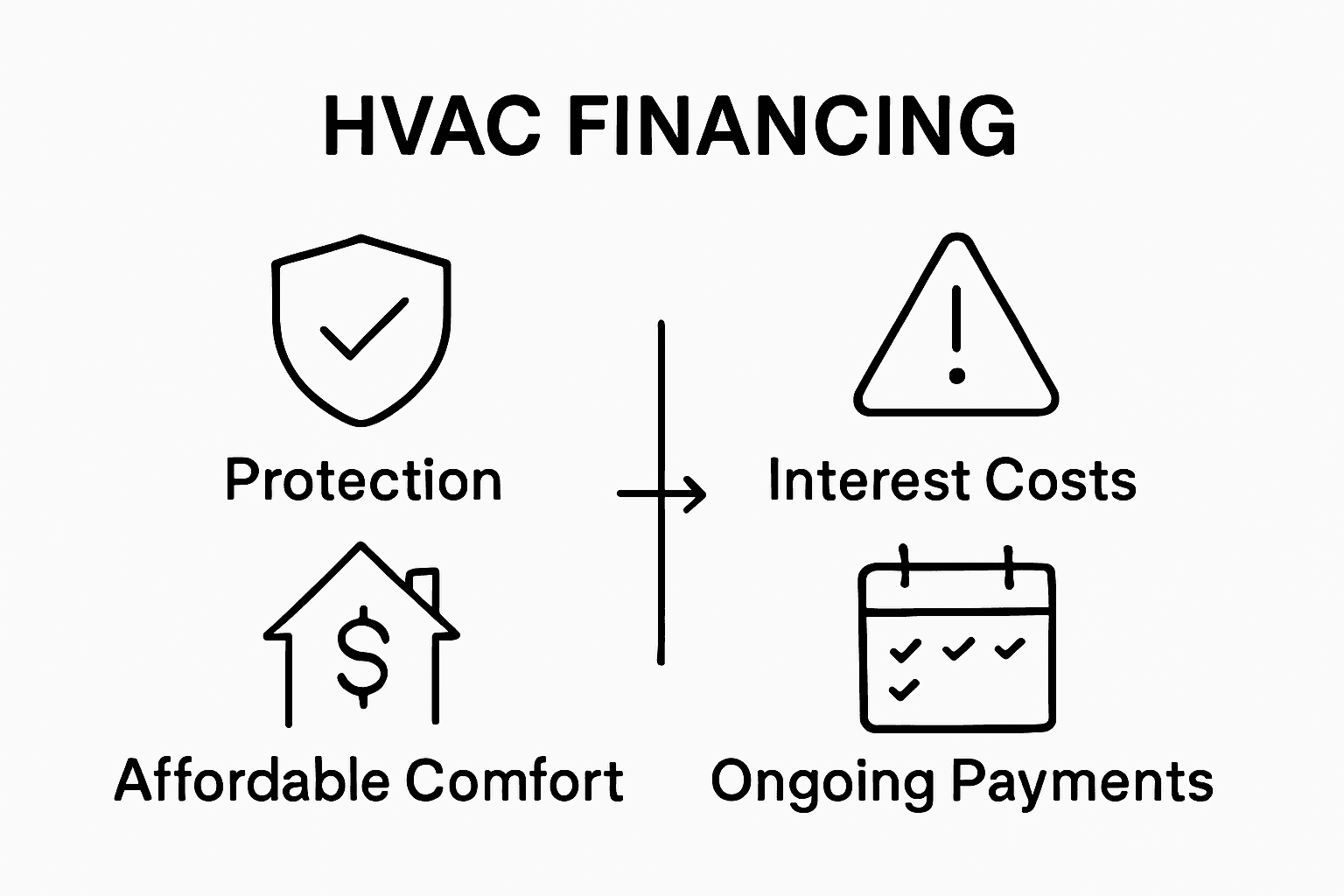
HVAC financing presents property owners with a complex landscape of financial opportunities and potential challenges. The ability to upgrade heating and cooling systems without immediate full-scale financial burden represents a significant advantage for homeowners facing unexpected system replacements or seeking energy efficiency improvements.
Benefits of HVAC financing include:
- Immediate system replacement without substantial upfront costs
- Preservation of emergency savings
- Potential tax deductions for energy-efficient upgrades
- Improved home comfort and value
- Flexible payment structures
- Opportunity to install higher-quality systems
Drawbacks property owners should carefully consider:
- Long-term interest expenses
- Potential impact on credit score
- Additional monthly financial obligations
- Risk of overborrowing
- Possible prepayment penalties
- Complex loan terms and conditions
The financial strategy requires careful analysis of personal economic circumstances. While financing enables critical home infrastructure improvements, property owners must thoroughly evaluate their long-term financial capacity and understand the total cost of financing beyond the initial installation expense.
Use this summary table to evaluate key benefits and drawbacks before selecting an HVAC financing solution:
| Consideration | Benefit Example | Drawback Example |
|---|---|---|
| Upfront Savings | No large out-of-pocket payment | Added monthly bills |
| Credit Impact | May build positive payment history | Missed payments can lower score |
| System Quality | Access to premium equipment | Might overspend on unneeded features |
| Total Cost | Flexible payouts for emergencies | Pay more due to total interest |
Pro Tip: Financial Calculation: Before committing to HVAC financing, calculate the total loan cost including interest and compare it against potential energy savings and system performance to determine true financial value.
Common Pitfalls and Smart Alternatives
Homeowners navigating HVAC financing must be aware of potential financial traps that can complicate their system upgrade process. Understanding common mistakes helps prevent costly decision-making errors, enabling more strategic and financially sound investments in home comfort systems.
Common Pitfalls to avoid include:
- Over-borrowing beyond actual system needs
- Neglecting to compare multiple financing offers
- Ignoring total loan cost and long-term implications
- Failing to check local energy efficiency rebates
- Overlooking potential tax credit opportunities
- Accepting first financing offer without negotiation
Smart Alternatives for budget-conscious homeowners:
- Explore manufacturer promotional financing
- Investigate local utility energy efficiency programs
- Consider staged system upgrades
- Research federal and state tax incentives
- Negotiate cash discounts
- Accumulate savings for partial upfront payment
Successful HVAC financing requires a comprehensive approach that balances immediate system requirements with long-term financial strategy. Homeowners should carefully evaluate their specific needs, compare multiple options, and consider both short-term affordability and potential future savings from energy-efficient upgrades.
Pro Tip: Strategic Savings: Create a dedicated savings fund specifically for HVAC upgrades, allowing you to potentially reduce financing costs and take advantage of immediate payment discounts.
Unlock Comfortable Living with Flexible HVAC Financing Solutions in Greenville
Facing unexpected HVAC costs can feel overwhelming when you want to maintain a cozy home without draining your savings. The key challenge many Greenville residents encounter is finding affordable ways to upgrade or repair their heating and cooling systems without months of financial strain. This article helped you understand important terms like personal loans, manufacturer financing, and home equity lines of credit so you can explore options that match your budget and credit profile.
If you want to move forward with confidence, MD Heating & Air Conditioning stands ready to guide you through every step. Whether you need a new heating system installation or expert maintenance services, our local team understands your urgency and offers trusted solutions backed by years of experience. Explore practical tips for system upkeep in our Heating Services & Maintenance Tips or browse helpful insights in our Uncategorized Archives » MD Heating & Air Conditioning.
Don’t let high upfront expenses delay your home comfort. Visit MD Heating & Air Conditioning today to request a free estimate and discover financing options tailored to your needs. Act now to enjoy reliable climate control through smart HVAC investment designed just for Greenville homeowners.
Frequently Asked Questions
What are the common types of HVAC financing options available?
HVAC financing options include personal loans, home equity loans, manufacturer financing programs, and specialized credit cards. Each option varies in terms of interest rates, repayment terms, and collateral requirements.
How can I improve my chances of getting approved for HVAC financing?
To improve your chances, maintain a good credit score (ideally above 650), prepare and provide proof of stable income, and gather necessary documentation like tax returns and pay stubs before applying.
What should I consider before choosing an HVAC financing option?
Consider interest rates, total loan costs, repayment terms, and potential penalties. Comparing at least three different financing options can help you find the most cost-effective solution that fits your financial situation.
Are there any tax benefits associated with HVAC financing for energy-efficient upgrades?
Yes, there may be potential tax deductions available for energy-efficient home upgrades, which can help offset some costs associated with HVAC financing and improve your overall return on investment.