

Choosing the Right AC in Greenville: Size, Type & Efficiency
Picking the right air conditioner means balancing comfort, efficiency, and long‑term cost so your home stays comfortable through Greenville’s hot, humid summers. This guide walks homeowners through practical steps: how to estimate size with BTU and tonnage, why a professional Manual J load calculation matters, how to compare central systems, ductless mini‑splits, and heat pumps, and how SEER ratings affect operating costs. You’ll also find local cost considerations for Greenville, financing options that can make upgrades accessible, and straightforward advice on smart features and maintenance to extend system life. Read on for clear action items, comparison charts, and checklists designed to turn technical choices into decisions that lower bills and improve comfort. Where helpful, we reference local service options from MD Heating & Air Conditioning, while keeping the focus on objective sizing, selection, and efficiency guidance you can use.
What Size AC Unit Do I Need for Your Home?

“Sizing” means matching a unit’s cooling capacity to your home’s heat gain so the system keeps things comfortable without short‑cycling or leaving the house humid. Right sizing affects comfort, humidity control, efficiency, and equipment life: undersized units run constantly and can’t keep up, while oversized units cycle on and off and don’t dehumidify well. Below we give a simple rule‑of‑thumb to get you started, explain BTU and tonnage, and explain why a detailed load calculation (Manual J) is the industry standard. Use the area‑based estimates here to orient your discussion, then verify with a professional Manual J that factors in insulation, window area, duct losses, and orientation. The quick example and table that follow help you estimate needs before scheduling a formal assessment.
Homes vary widely by layout, insulation, and sun exposure, so the table below is a fast reference that links common house sizes to estimated BTU and tonnage — a useful starting point for conversations with an installer.
Consider this table a conversation starter, not a final answer. A proper Manual J load calculation measures envelope details, internal gains, and ductwork to produce a recommended BTU and tonnage that fits your home’s real needs.
How Is AC Unit Sizing Measured Using BTU and Tonnage?
BTU (British Thermal Unit) is how much heat an AC can remove in an hour. Tonnage is the industry shorthand where one ton = 12,000 BTU. Many people start with a BTU‑per‑square‑foot rule (often 20–30 BTU/sq ft depending on climate and insulation) and then refine that with local factors like sun exposure and ceiling height. For example, an 1,800 sq ft Greenville home using ~24 BTU/sq ft suggests around 43,200 BTU (about 3.6 tons) before you account for specifics that can raise or lower the requirement. Converting BTU to tons is simple math, but it’s not a substitute for a full load calculation that checks the whole HVAC system — compressor, evaporator coil, air handler, and ductwork — for a true match.
That basic conversion sets up the reason you shouldn’t rely only on rules of thumb and when it makes sense to call a professional for a Manual J assessment.
Why Is a Professional Manual J Load Calculation Important?
A Manual J load calculation adds up heat gains and losses by checking insulation, window area and direction, occupancy, appliances, and duct leakage. It’s the industry standard for accurate sizing. Relying just on square‑foot rules risks oversizing or undersizing because surface areas and local climate — especially Greenville’s humid summers — affect peak cooling load and dehumidification needs. A correct Manual J reduces comfort problems, high utility bills, and premature equipment wear, and it helps protect manufacturer warranties that require proper sizing and installation. MD Heating & Air Conditioning offers professional Manual J load calculations and free on‑site estimates in Greenville County to turn a calculation into a tailored equipment recommendation and a written installation quote.
Knowing what Manual J looks at explains why it often changes the equipment choices you’d expect from simple rules of thumb.
What Are the Best Types of AC Units for Residential Homes?
Choosing a system means weighing your home layout, existing ductwork, efficiency goals, and budget. The main options — central air conditioning, ductless mini‑splits, and air‑source heat pumps — each have trade‑offs. Central systems cool multiple rooms through ducts and work best where ducts are already in good shape. Ductless mini‑splits give room‑by‑room control with no ducts, a great choice for additions or homes without ductwork. Heat pumps heat and cool and have become more efficient for Greenville’s climate, making them a good single‑system option for year‑round comfort and energy savings.
Use the comparison matrix below to weigh pros, cons, typical SEER ranges, and installation complexity for each common residential choice.
Match system type to your needs — central for homes with ducts, mini‑splits for added rooms or precise zoning, and heat pumps when you want combined heating and cooling efficiency. After you pick a system type, ask installers about duct condition and inverter or variable‑speed options that improve part‑load performance.
How Do Central Air Conditioning Systems Work and When Are They Ideal?
Central systems move refrigerant between an outdoor condensing unit and an indoor air handler while circulating conditioned air through ductwork. Main components include the compressor, condenser coil, evaporator coil, and air handler. These systems shine in homes with well‑sealed ducts because they deliver even comfort across multiple rooms and can integrate with whole‑home filtration or humidity control. When planning a central system, consider duct condition, return placement, and whether zoning dampers are needed to balance airflow — leaky or poorly sized ducts can erase the benefits of a high‑SEER unit and raise operating costs. If you need a replacement, factor duct sealing or repairs into your overall plan.
Good ductwork is a major contributor to system performance and helps you decide whether a ductless approach is a better fit for particular spaces.
What Are the Pros and Cons of Ductless Mini-Splits and Heat Pumps?
Ductless mini‑splits place compact indoor units in rooms and connect them to a single outdoor compressor, offering high efficiency and precise zoning. Heat pumps transfer heat to heat or cool a home and are increasingly effective in Greenville. Mini‑splits work well for additions, garages, or rooms without ducts, and they cut duct losses while giving fine control over individual zones. Heat pumps can replace separate heating systems, delivering year‑round efficiency. Both systems require proper sizing and correct refrigerant charge to meet their SEER and HSPF ratings. Maintenance varies: mini‑splits need regular filter cleaning and occasional professional service, while heat pumps benefit from seasonal tune‑ups to keep reversing valves and compressors in good shape.
Weigh whether you want targeted zoning, whole‑home integration, or a single system for both heating and cooling before moving on to cost and financing considerations.
How Important Is Energy Efficiency When Choosing an AC Unit?
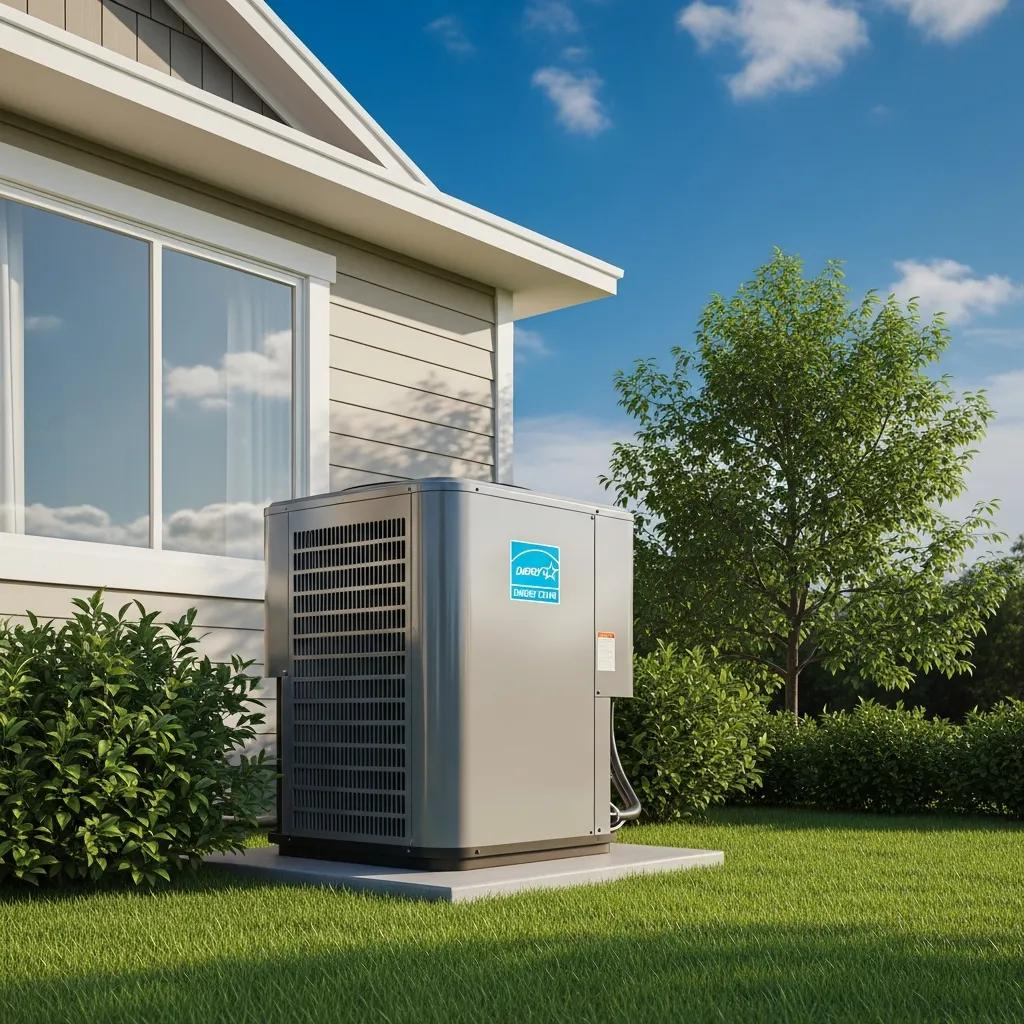
Energy efficiency affects your monthly bills, comfort, and environmental impact, so SEER and EER ratings should influence your choice alongside purchase price. SEER (Seasonal Energy Efficiency Ratio) measures seasonal cooling output divided by energy used; EER measures efficiency at a single operating point. In Greenville’s hot, humid summers, higher SEER units usually cut annual energy use and improve part‑load performance during long cooling seasons. That said, returns diminish past certain points — compare incremental savings to the higher upfront cost and consider pairing upgrades with duct sealing and smart thermostats to maximize benefits.
The table below connects SEER brackets to estimated energy savings versus a 13 SEER baseline and how that typically affects local annual costs so you can weigh efficiency upgrades against expected returns in Greenville.
Higher SEER equipment can lower energy use across Greenville’s long cooling season, but combining efficiency upgrades with correct sizing and duct improvements makes those savings real instead of lost to installation issues.
What Does SEER Rating Mean and Why Does It Matter for Your Energy Bills?
SEER shows how efficiently a system cools over a season — higher numbers mean more cooling per unit of electricity and lower operating costs. Moving from a 14 SEER to a 16 SEER unit in Greenville often produces double‑digit percentage savings on cooling bills, depending on usage, home envelope quality, and electricity rates. Remember that SEER is a system‑level metric: duct losses, wrong refrigerant charge, or poor airflow can erase expected gains from a high‑SEER outdoor unit. Installation quality and properly matched indoor components matter as much as the advertised SEER. Treat SEER as one piece of an efficiency plan that includes correct sizing, sealed ducts, and smart controls.
Understanding SEER leads naturally to considering certified products like ENERGY STAR and how their specs translate to humid local conditions.
How Do Energy Star Certified AC Units Save Money in Greenville’s Climate?
ENERGY STAR certified units meet stricter efficiency and performance standards than federal minimums, which often delivers measurable savings in hot, humid climates like Greenville. ENERGY STAR testing includes part‑load efficiency and humidity control, so these units can improve comfort while lowering electricity use over the cooling season. For Greenville homeowners, choosing ENERGY STAR equipment alongside proper sizing and duct improvements increases the chance that the higher rated SEER will actually translate into fuel cost reductions. Pair certified equipment with a smart thermostat and regular maintenance to keep performance on target.
Choosing ENERGY STAR gear should go hand‑in‑hand with professional installation and commissioning to ensure the labeled efficiency is achieved in your home.
What Are the Typical AC Installation Costs in Greenville, SC?
Typical AC installation costs in Greenville vary with system type, SEER rating, tonnage, duct condition, and labor complexity — there’s no single fixed price. Basic replacements using existing ducts and mid‑range SEER units sit at the lower end of local ranges, while high‑SEER systems, heat pump retrofits, or jobs that need extensive ductwork or zoning sit at the higher end. Ask for transparent pricing and free estimates that separate equipment, labor, permits, and any duct repairs. Financing can make higher‑efficiency systems more attainable by spreading payments and lowering upfront cost barriers.
Below are the main factors that drive installation pricing so you know what to expect when getting on‑site estimates.
- Unit Type and SEER Level: Higher SEER and heat pump capabilities raise equipment cost.
- Tonnage and Complexity: Bigger homes and multi‑zone systems need more labor and parts.
- Ductwork Condition: Leaky or poorly sized ducts add repair or replacement costs.
- Permits and Access: Permits, electrical upgrades, and hard access increase time and price.
Knowing these drivers helps you get better quotes and ask targeted questions during on‑site visits so bids are easier to compare.
What Factors Influence AC Installation Pricing?
Several cost drivers shape the final quote. Equipment class and SEER set the baseline; larger tonnage and inverter compressors cost more but offer better part‑load efficiency. Local labor rates, duct modifications, condenser pad or line‑set upgrades, and permit fees all affect total price. Prepare for estimates by having basic home details ready — square footage, current HVAC equipment, and known comfort issues — and by prioritizing items like duct sealing so you can weigh equipment efficiency against building envelope improvements.
The short checklist below helps homeowners gather details before an estimate and ensures you compare contractors on an apples‑to‑apples basis.
- Gather home square footage and number of levels.
- Note existing equipment brand and any known duct issues.
- Record thermostat type and any zoning or comfort trouble spots.
- Identify areas where access may be restricted for installers.
These steps streamline bidding and make it easier to tell if a quote is a full replacement or just an equipment swap‑out.
How Can Financing Make AC Installation More Affordable?
Financing converts an upfront capital expense into predictable monthly payments, letting homeowners choose higher‑efficiency equipment without paying the full cost right away. Common options include low‑interest installment plans and promotional offers with deferred payments; when combined with energy savings, monthly payments can compare favorably to current utility bills. MD Heating & Air Conditioning provides financing options along with free estimates and transparent pricing so Greenville homeowners can compare monthly payment scenarios and pre‑qualify before committing. Ask about terms, down payments, and available rebates during the estimate to clarify total cost and projected payback from efficiency gains.
When evaluating financing, compare the total financed amount to estimated annual energy savings to find your true monthly net cost after utility reductions.
What Smart Features and Maintenance Should I Consider for My AC Unit?
Smart features and routine maintenance both extend equipment life and improve ongoing efficiency. Smart thermostats add scheduling, remote control, and usage insight to reduce runtime while keeping comfort. Zoning systems focus conditioning only where needed to cut waste. Indoor air quality upgrades like better filters and UV purification protect occupants and keep coils cleaner, which helps efficiency. Routine maintenance — filter changes, coil cleaning, refrigerant checks, and airflow verification — keeps systems running as designed and prevents small issues from becoming costly repairs.
The list below highlights smart features and IAQ options to consider when specifying a new system or upgrade.
- Smart Thermostats: Remote control, scheduling, and usage analytics.
- Zoning Systems: Different setpoints for separate areas to save energy.
- Filtration and Purification: Improve indoor air quality and reduce system fouling.
- Variable-Speed Components: Match output to demand for better comfort and efficiency.
Choose features based on your home layout and priorities — pairing smart controls with the right-sized system delivers the best combination of comfort and savings.
How Do Smart Thermostats and Zoning Improve Comfort and Savings?
Smart thermostats combine remote access with adaptive features to cut energy use while keeping you comfortable, and they provide data to spot unusual runtime or inefficiencies. Zoning splits a home into controlled areas using dampers or multiple indoor units so you cool only occupied spaces, which reduces wasted conditioning and lowers bills. Together, smart controls and zoning help solve hot or cold spots in multi‑story or open‑plan homes by addressing local load differences. These upgrades pay off when paired with correct system sizing, because better control lets smaller or variable‑speed equipment meet demand without overworking.
Integrating smart controls and zoning complements good sizing practice and highlights why high‑quality installation is essential for realizing expected efficiency gains.
Why Is Regular AC Maintenance Essential for Longevity and Performance?
Regular maintenance preserves efficiency, prevents breakdowns, and extends equipment life by catching common issues — dirty coils, clogged filters, low refrigerant — before they get worse. Seasonal tune‑ups usually include inspecting electrical connections, checking refrigerant pressures, verifying airflow, and cleaning condensate drains — tasks that restore design performance and reduce energy use. Homeowners on maintenance plans typically see fewer emergency repairs and more predictable operating costs because preventive service addresses wear early. MD Heating & Air Conditioning offers maintenance packages tailored to Greenville homes to help preserve warranties and keep systems running through humid summers and shoulder seasons.
A maintenance plan protects your investment and helps maintain the efficiency gains from higher‑SEER equipment, making it a practical complement to careful equipment selection.
How Does MD Heating & Air Conditioning Help You Choose the Right AC Unit?
MD Heating & Air Conditioning is a family‑owned local partner serving Greenville County and the Upstate. Their process begins with a free estimate and a professional Manual J load calculation to define capacity needs, followed by system selection counseling (central air, ductless mini‑splits, or heat pumps) and installation by NATE‑certified technicians. The company highlights transparent pricing, financing options, and 24/7 emergency service to reduce friction and ensure systems are installed and maintained for long‑term performance. If you want local expertise and a clear path from assessment to installation, MD Heating & Air provides a full‑service approach that aligns equipment choice with Greenville’s climate and building practices.
That service offering turns a precise load calculation and system recommendation into a practical installation plan with financing and ongoing support.
What Makes NATE-Certified Technicians the Best Choice for Installation?
NATE certification shows technicians have passed industry‑recognized tests that prove knowledge in equipment operation, diagnostics, and correct installation — all of which affect system efficiency and lifespan. Certified techs understand critical details — compressor sizing, refrigerant charge, evaporator condition, and airflow balance — so their work helps preserve warranties and ensures the labeled SEER is achieved in the field. Choosing NATE‑certified installers reduces the risk of common installation mistakes that cause higher bills and early failures, giving homeowners confidence that local climate and code issues will be handled correctly during installation.
Appreciating the value of certification helps homeowners weigh installer qualifications alongside price when comparing bids.
How Does Local Greenville Expertise Ensure the Perfect AC Solution?
Local knowledge matters because Greenville’s hot, humid climate, common building styles, and regional codes shape the right equipment choice, duct design, and humidity control strategies. Technicians familiar with local cooling loads, typical attic and wall construction, and frequent comfort complaints can recommend systems, SEER levels, and IAQ accessories that deliver real performance in the Upstate. MD Heating & Air Conditioning’s family‑owned approach emphasizes community knowledge and responsiveness — useful when balancing efficiency, cost, and installation logistics. Homeowners get extra value from local experience during permitting, system commissioning, and when evaluating rebates or financing that make higher‑efficiency equipment more affordable.
If you’re ready to explore options, request a free on‑site estimate and Manual J assessment to receive a tailored recommendation and clear financing information from a Greenville specialist.
Frequently Asked Questions
What are the signs that my AC unit is too small or too large for my home?
If your AC is too small, it may struggle to reach set temperatures, run nearly continuously, and leave your home humid — all of which raise energy bills. An oversized unit will cool rooms quickly then shut off (short‑cycle), causing uneven temperatures, frequent on/off cycles, and added wear. Signs of short‑cycling include frequent short runtimes and poor humidity control. Watching these symptoms helps you decide whether your unit is properly sized.
How often should I schedule maintenance for my AC unit?
Schedule maintenance at least once a year, ideally before the cooling season starts. Regular service keeps systems efficient, extends life, and helps avoid costly breakdowns. A seasonal tune‑up usually includes refrigerant checks, coil cleaning, and filter changes. Older systems or houses in very hot climates may benefit from biannual checks to stay reliable.
What financing options are available for purchasing a new AC unit?
Many HVAC companies, including MD Heating & Air Conditioning, offer financing to help homeowners afford new systems. Options commonly include low‑interest installment plans, promotional financing with deferred payments, or leasing. These programs let you spread cost over months or years so you can choose higher‑efficiency equipment that saves on energy bills. Always ask about available financing during your estimate.
How can I improve the energy efficiency of my existing AC unit?
Boost efficiency with regular maintenance — change filters, clean coils, and check refrigerant. Seal ductwork to prevent leaks, use a programmable or smart thermostat, and improve insulation where possible. Adding shading or reflective window treatments reduces solar heat gain. Small, targeted upgrades can make an older system perform noticeably better.
What should I look for when choosing a contractor for AC installation?
Look for qualifications, experience, and customer feedback. Prefer NATE‑certified technicians and contractors who provide a detailed, written estimate that lists equipment, labor, permits, and any ductwork. Choose a local company familiar with Greenville’s climate and codes — they’ll offer more tailored solutions for your home.
Are there any tax credits or rebates available for energy-efficient AC units?
Yes — tax credits and utility rebates are sometimes available for energy‑efficient units, particularly ENERGY STAR models. Programs vary by state and local utility, so check with your energy provider or tax advisor for Greenville‑specific incentives. Some HVAC companies also run promotions or have financing that lowers upfront cost.
Conclusion
Choosing the right AC matters for comfort, energy bills, and equipment longevity. By understanding sizing, system types, and energy ratings you can make informed choices that improve indoor air quality and lower utility costs. When you’re ready, consult local experts for a tailored recommendation. Explore our services to find the AC solution that fits your home and budget.