
Most Greenville homeowners are surprised to learn that over 40 percent of American residential energy use comes directly from heating and cooling. Knowing the difference between AC and HVAC systems matters if you want real efficiency and lower bills. By breaking down their unique features and common misconceptions, this guide helps you choose the right technology for true home comfort in South Carolina’s changing climate.
Table of Contents
- AC Vs. HVAC: Core Definitions Explained
- System Types And Functional Differences
- Key Components And How Each Operates
- Energy Efficiency And Cost Considerations
- Choosing Suitable Solutions For Your Home
Key Takeaways: AC vs HVAC for Efficiency, Cost & Comfort
| Point | Details |
|---|---|
| Understanding System Differences | Air Conditioning (AC) focuses solely on cooling, whereas HVAC encompasses heating, cooling, and ventilation for comprehensive indoor climate management. |
| Energy Efficiency Matters | Investing in high-efficiency HVAC systems can lead to significant long-term savings on energy bills and reduced environmental impact. |
| System Selection Criteria | Home characteristics and regional climate demands play crucial roles in selecting the most suitable HVAC system for optimal comfort and efficiency. |
| Professional Consultation Recommended | Engaging a local HVAC professional for assessments and recommendations ensures tailored solutions that meet specific home and climate needs. |
AC vs. HVAC: Core Definitions Explained
Understanding the distinctions between Air Conditioning (AC) and Heating, Ventilation, and Air Conditioning (HVAC) systems is crucial for Greenville homeowners seeking optimal home comfort solutions. While many people use these terms interchangeably, they represent different scopes of temperature and air quality management. HVAC terminology provides critical insights into these specialized systems.
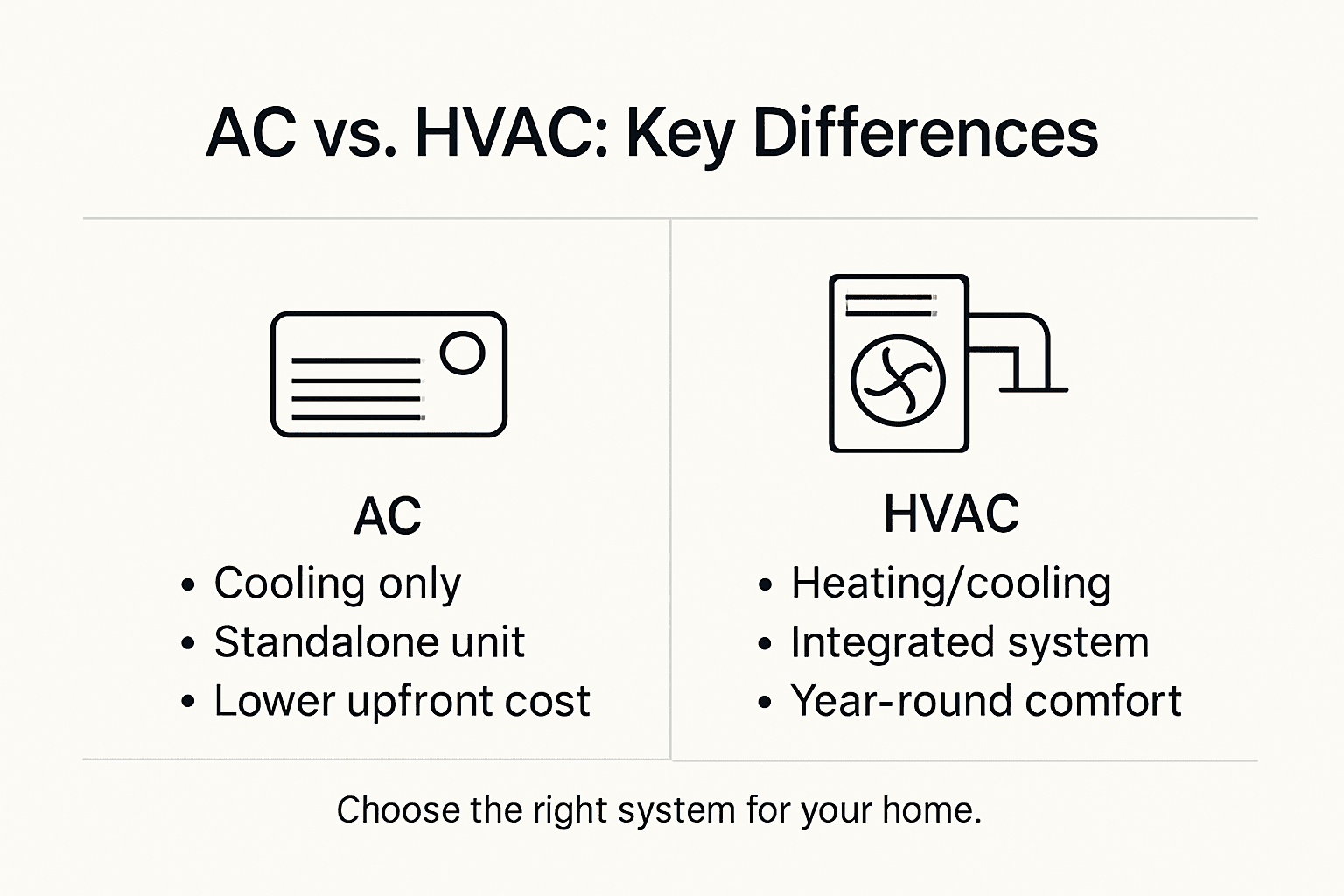
At its core, Air Conditioning (AC) specifically refers to cooling systems designed to reduce indoor air temperature and humidity. These units focus exclusively on creating a comfortable thermal environment by removing heat and moisture from interior spaces. AC systems typically include window units, split systems, and central air conditioners that circulate cooled air throughout a home.
In contrast, HVAC represents a more comprehensive approach to indoor environmental control. Beyond just cooling, HVAC systems integrate heating, ventilation, and air conditioning technologies to manage temperature, humidity, air quality, and overall comfort. These sophisticated systems include furnaces, air conditioners, heat pumps, ductwork, and advanced filtration mechanisms that work together to create a balanced indoor climate.
The primary difference lies in scope and functionality: AC is a component of HVAC, but HVAC encompasses much more than just cooling. While an AC unit provides relief during hot summers, a complete HVAC system ensures year-round comfort by heating in winter, cooling in summer, and maintaining consistent air circulation and quality.
To better understand how AC and HVAC systems serve homeowners, here is a side-by-side comparison of their key functions and benefits:
| Aspect | AC System | HVAC System |
|---|---|---|
| Main Purpose | Cools indoor air | Heats, cools, and ventilates |
| Year-Round Use | Summer only | All seasons |
| Air Quality Impact | Minimal filtration | Advanced filtration possible |
| Comfort Control | Limited to cooling | Temperature and humidity control |
| System Scope | One component | Full home climate management |
Pro tip:When consulting HVAC professionals, always specify your entire home comfort needs rather than focusing solely on cooling to ensure you receive a comprehensive system recommendation.
System Types and Functional Differences
HVAC systems come in a diverse array of configurations designed to meet specific residential and commercial cooling and heating needs. Comprehensive engineering research reveals ten primary HVAC system types that offer unique approaches to indoor climate management.
Traditional split systems represent the most common residential configuration, featuring separate indoor and outdoor units connected by refrigerant lines. These systems typically include a central air conditioner for cooling and a furnace for heating, providing balanced temperature control. Variations like multi-split systems expand on this design, allowing multiple indoor units to connect to a single outdoor compressor, enabling zone-specific temperature management for larger homes.
More advanced technologies like variable refrigerant flow (VRF) and geothermal systems offer sophisticated alternatives for homeowners seeking enhanced efficiency. VRF systems can simultaneously heat and cool different zones, adapting quickly to changing temperature requirements. Geothermal systems leverage underground temperature stability, drawing heating and cooling energy directly from the earth, which can significantly reduce long-term energy consumption.
Packaged HVAC units provide another distinct solution, especially for smaller spaces or homes with limited installation area. These compact systems combine heating and cooling components into a single external unit, often installed on rooftops or alongside buildings. Their integrated design simplifies installation and maintenance while providing comprehensive climate control in a more streamlined package.
Pro tip:Consult with a local HVAC professional to assess your specific home layout and climate needs before selecting a system type, as individual property characteristics can significantly impact system performance.
Here is a summary of major HVAC system types and their ideal applications:
| System Type | Key Advantage | Best For |
|---|---|---|
| Split System | Reliable, flexible setup | Most homes |
| Multi-Split | Zoning for rooms | Large houses |
| VRF System | Simultaneous heat/cool | Multi-zone needs |
| Geothermal | High efficiency, eco-friendly | New installations |
| Packaged Unit | Compact, simple install | Small spaces |
Key Components and How Each Operates
Unitary HVAC equipment analysis reveals a complex network of interconnected components that work together to manage indoor climate control. Understanding these critical parts helps homeowners appreciate the sophisticated engineering behind their heating and cooling systems.
The compressor serves as the heart of any HVAC system, acting as a critical component that circulates refrigerant and enables heat transfer. Located in the outdoor unit, it compresses refrigerant from a low-pressure gas to a high-pressure, high-temperature state, which allows the system to move thermal energy effectively. Paired with the compressor, condenser coils release heat outside during cooling cycles, while evaporator coils absorb indoor heat, creating the fundamental cooling mechanism.
Air movement represents another crucial aspect of HVAC functionality. Blower motors and air handlers work in tandem to circulate conditioned air throughout a home’s ductwork. These components ensure even temperature distribution, filtering and moving air across different zones. Advanced systems incorporate variable speed motors that can adjust airflow dynamically, improving energy efficiency and maintaining more consistent indoor temperatures.
Control systems have evolved dramatically, with modern HVAC technologies featuring sophisticated digital thermostats and smart control mechanisms. These intelligent interfaces allow precise temperature management, programmable schedules, and even remote operation through smartphone applications. Sensors embedded within these systems can detect occupancy, humidity levels, and outdoor temperature variations, automatically adjusting system performance for optimal comfort and energy conservation.
Pro tip:Schedule annual professional maintenance to ensure each HVAC component operates at peak efficiency, which can extend system life and prevent costly unexpected breakdowns.
Energy Efficiency and Cost Considerations
Heating and cooling systems represent the largest energy expenses in residential settings, making energy efficiency a critical factor for homeowners seeking to balance comfort and cost. Understanding the financial and environmental implications of HVAC and AC system choices can lead to significant long-term savings and reduced environmental impact.

Modern energy-efficient systems offer substantial cost benefits through advanced technologies like variable-speed motors, multi-stage compressors, and smart zoning capabilities. These innovations allow precise temperature control while dramatically reducing energy consumption. High-efficiency units typically carry a Seasonal Energy Efficiency Ratio (SEER) rating, with newer models achieving ratings between 15 and 26, compared to older systems that often operate at 10 or below. Higher SEER ratings translate directly into lower monthly utility expenses and reduced environmental footprint.
Initial installation costs versus long-term operational expenses represent a crucial consideration for homeowners. While high-efficiency HVAC systems might demand a higher upfront investment, they can generate significant savings through reduced energy consumption. Factors such as home size, local climate, insulation quality, and usage patterns dramatically influence overall system performance and economic efficiency. Advanced systems with smart controls and programmable features can further optimize energy use, automatically adjusting temperature settings based on occupancy and external weather conditions.
Regional climate variations in Greenville dramatically impact system selection and efficiency potential. Southern climates like South Carolina demand robust cooling capabilities, making energy-efficient systems particularly valuable. Homeowners should consider supplementary strategies like proper insulation, regular maintenance, and strategic thermostat programming to maximize their system’s performance and minimize operational costs.
Pro tip:Request a professional energy audit to identify specific efficiency opportunities and potential system upgrades tailored to your home’s unique characteristics.
Choosing Suitable Solutions for Your Home
Professional HVAC system selection requires precise home load calculations and strategic considerations that go far beyond simple equipment purchasing. Homeowners in Greenville must evaluate multiple factors to ensure optimal comfort, efficiency, and long-term performance.
Home characteristics play a fundamental role in system selection. Square footage, ceiling height, insulation quality, and window configurations directly impact heating and cooling requirements. Older homes with poor insulation might require more robust systems or supplemental upgrades, while newer construction often allows for more efficient, compact solutions. Factors like sun exposure, number of occupants, and specific room usage patterns also significantly influence the most appropriate HVAC or AC system design.
Regional climate demands special attention for Greenville homeowners. South Carolina’s hot, humid summers necessitate systems with strong dehumidification capabilities and high cooling efficiency. Zoned systems offer particular advantages in this environment, allowing different areas of the home to maintain individualized temperatures. Split systems with multi-stage compressors and variable-speed motors can provide precise temperature control while minimizing energy consumption, making them ideal for managing the region’s challenging summer heat and occasional mild winters.
Budgetary considerations extend beyond initial purchase price. Homeowners should analyze total cost of ownership, including installation expenses, potential energy savings, maintenance requirements, and expected system lifespan. Advanced systems might carry higher upfront costs but can generate substantial long-term savings through improved efficiency and reduced utility expenses. Professional HVAC contractors can provide detailed calculations comparing different system options, helping homeowners make informed decisions that balance immediate affordability with future financial benefits.
Pro tip:Request multiple professional assessments and energy efficiency calculations before making a final system selection, ensuring you receive comprehensive recommendations tailored to your specific home environment.
Make the Right Choice for Year-Round Comfort with MD Heating & Air Conditioning
Choosing between AC and HVAC systems can feel overwhelming. Whether your goal is to cool your space efficiently during hot Greenville summers or maintain balanced comfort all year long with heating and ventilation, understanding your home’s unique needs is crucial. This article highlights key terms like HVAC scope, system types, and energy efficiency that can help you make informed decisions. But knowing the difference is only the first step.
MD Heating & Air Conditioning specializes in tailored solutions that align with your home size, climate conditions, and budget. From expert installation to ongoing maintenance and repair, you can trust their local experience to ensure your HVAC or AC system performs reliably and efficiently. Learn more about maintaining your heating equipment and maximizing energy savings by visiting MD Heating & Air: Heating Services & Maintenance Tips.

Ready to upgrade your system or need guidance on what fits your home best? Visit https://mdheatair.com to request a free estimate or speak directly with their qualified team. For additional insights and topics, explore the Uncategorized Archives » MD Heating & Air Conditioning and find answers tailored to Greenville homeowners just like you. Don’t wait for discomfort to take over your home comfort. Connect with the experts now and take control of your indoor climate today.
Frequently Asked Questions
What is the primary difference between AC and HVAC systems?
AC systems focus solely on cooling indoor air, while HVAC systems encompass heating, ventilation, and air conditioning technologies for comprehensive climate control.
When should I consider an HVAC system instead of just an AC unit?
You should consider an HVAC system if you need temperature and humidity control year-round, including heating during the winter in addition to cooling in summer.
How can I improve the energy efficiency of my HVAC or AC system?
Enhancing energy efficiency can be achieved through regular maintenance, using programmable thermostats, and selecting high-efficiency units with a high SEER rating.
What factors should I consider when choosing between different HVAC system types?
Key factors include your home’s size, insulation quality, specific heating and cooling needs, regional climate demands, and your budget for both installation and long-term operational costs.