Why a Professional AC Installation Makes All the Difference for Comfort in Greenville, SC
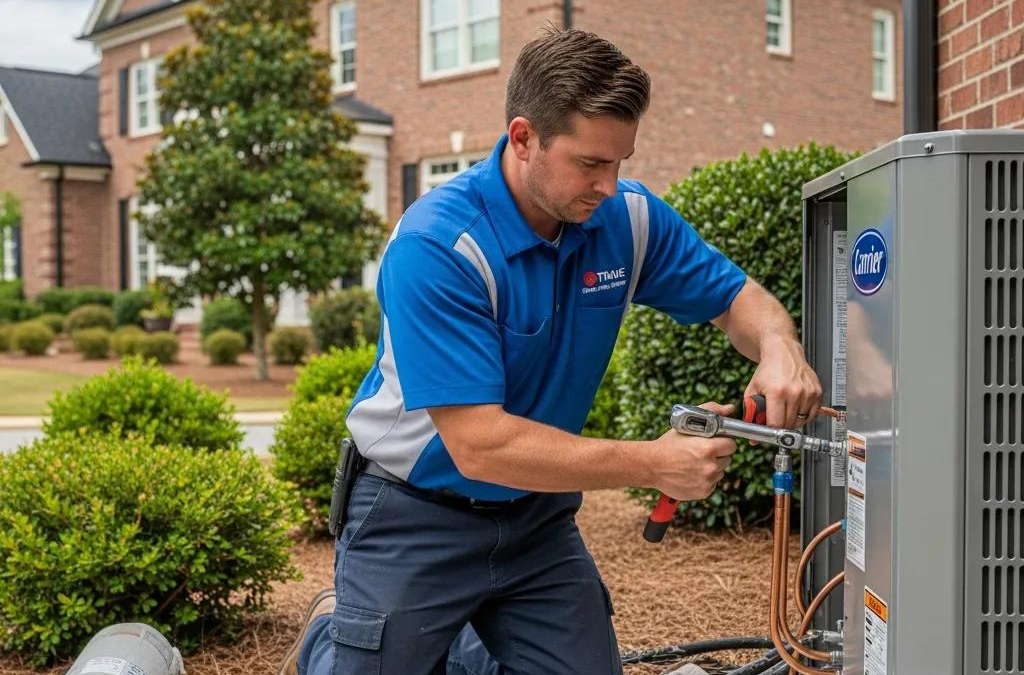
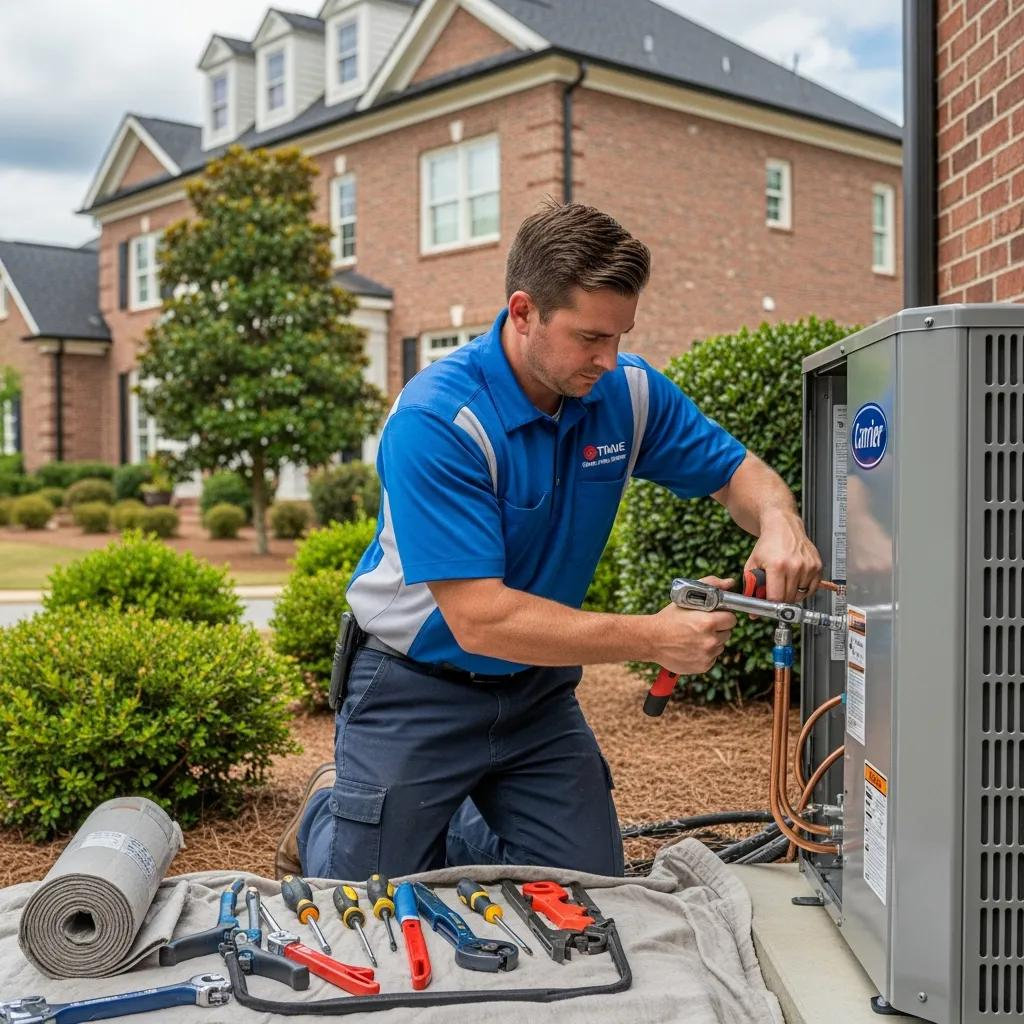
A properly executed professional AC installation is more than setting an outdoor unit on a pad and wiring a thermostat. It’s a coordinated engineering job that matches system capacity, airflow, refrigerant charge, and controls to your house and our hot, humid Greenville climate. When installation is done right, your home reaches set temperatures more reliably, controls humidity better, and produces the predictable energy bills manufacturers advertise. This guide walks through what a professional install includes, why precision matters for comfort and long-term value, and how choices interact with current efficiency standards like SEER2 and modern refrigerants. You’ll get the exact steps installers follow—site assessment, Manual J sizing, duct evaluation, refrigerant charging, and commissioning—and the measurable upside: better efficiency, longer equipment life, and warranty protection. We also compare central AC, ductless mini-splits, and heat pumps for Greenville homes, outline the risks of DIY or poor installs, and show how to start with a local pro for a free estimate and available financing. Relevant search terms like professional AC installation Greenville SC, AC installation Greenville, and NATE certified AC installer Greenville are included to help homeowners find trustworthy options.
What Is Professional AC Installation and Why Is It Essential?
Professional AC installation is the step-by-step process of sizing, selecting, installing, and commissioning a cooling system so it performs as intended in a specific home. The key is precision: an accurate load calculation (Manual J), correctly sized distribution (ductwork and registers), proper refrigerant charge, and thorough testing. When each component—the compressor, condenser, evaporator coil, ducts, thermostat, and refrigerant lines—is matched and validated, you get the SEER2-rated savings manufacturers promise and protect warranty coverage. Proper installation also ensures compliance with refrigerant regulations and local codes, because trained technicians document work and handle refrigerants safely.
Qualified installers follow consistent steps to deliver predictable results, which reduces callbacks and lowers operating costs. The next section explains how expert installation translates into noticeable home comfort improvements.
How Does Expert AC Installation Ensure Optimal Home Comfort?
Expert AC installation delivers steady comfort by matching system capacity to your home’s heat load and balancing airflow across rooms. Correct sizing prevents short-cycling or nonstop run times—both of which cause temperature swings and poor humidity control when installers skip Manual J calculations. Inspecting and sealing ducts removes pressure imbalances and hot/cold spots, while smart thermostat placement and zoning keep different areas comfortable without overcooling. In Greenville’s humidity, technicians also consider dehumidification—coil selection and fan speeds—that change how comfortable your home feels even at similar temperatures outdoors.
A home that’s been load-calculated and airflow-balanced typically sees fewer comfort complaints and more stable indoor humidity. Next is a clear checklist homeowners should expect during installation.
What Are the Key Steps in a Professional AC Installation Process?
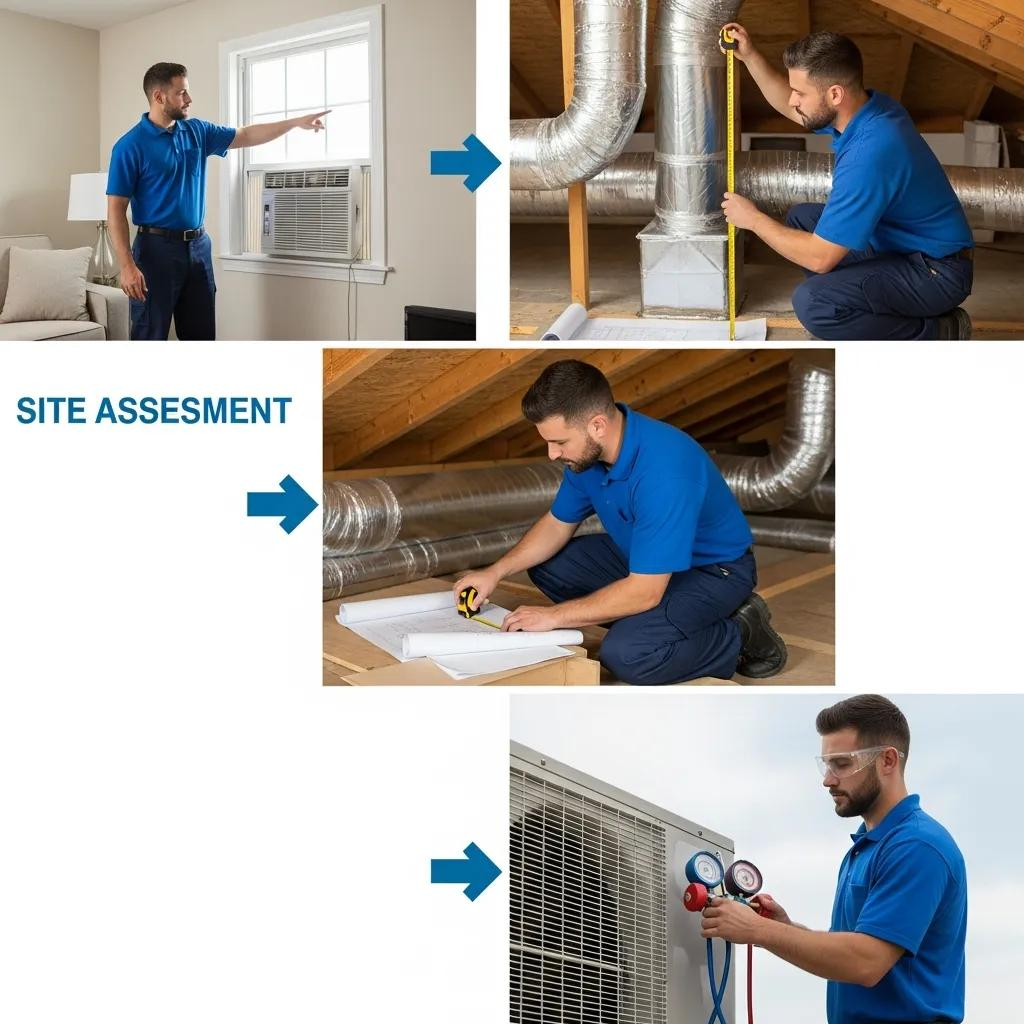
A professional installation follows repeatable stages: site assessment, load calculation, equipment selection, duct inspection and any needed repairs, refrigerant line setup, system start-up, and commissioning with documented testing. The site assessment records orientation, insulation, window types, and the existing duct layout; the load calculation (Manual J) converts those inputs into the cooling capacity you actually need. Duct inspection reveals leaks, undersized runs, or poor returns that should be fixed to reach expected efficiency. During commissioning, technicians charge refrigerant to spec and verify the compressor and evaporator coil operate at designed pressures and temperatures. Final testing includes airflow measurements, temperature splits, electrical checks, and a customer walkthrough that covers maintenance and warranty paperwork.
Homeowners who know these steps can confirm an installer’s thoroughness and should expect a documented installation report. That report ties directly to the measurable benefits described next.
What Are the Top Benefits of Expert AC Installation for Your Home?
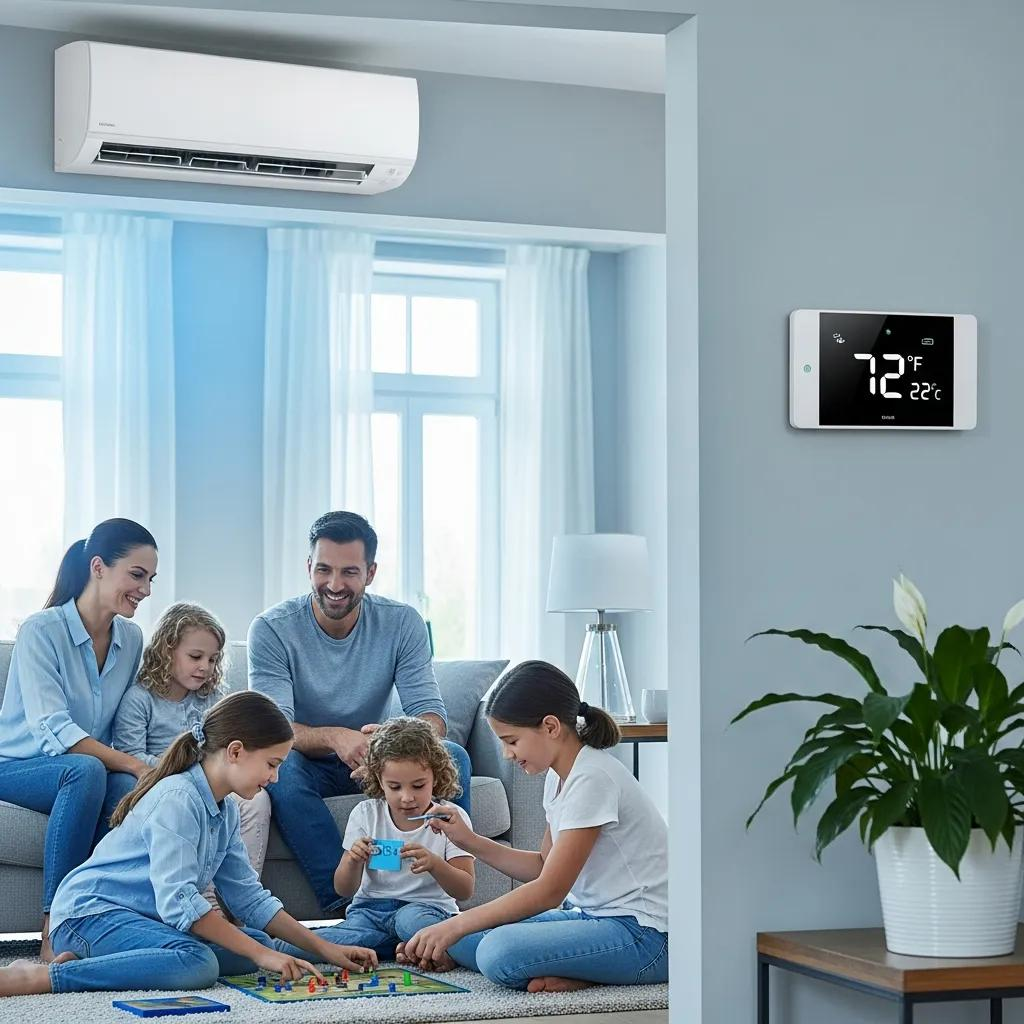
Professional installation delivers measurable advantages: real energy savings, steadier comfort, longer equipment life, warranty protection, and often improved indoor air quality. Each benefit traces back to precision—achieving SEER2 performance in the field, sealed ducts, balanced airflow, and correct refrigerant charge reduce wasted energy and component stress. For Greenville homes, a proper install can mean meaningful seasonal savings and fewer mid-summer breakdowns when cooling demand peaks. The table below breaks down installation phases, typical tasks, and outcomes so you can see how benefits add up.
The table shows how each phase produces concrete homeowner outcomes. Below we expand on the chief benefits.
- Energy savings: A properly installed SEER2 system delivers the efficiency you expect, lowering monthly bills.
- Even, comfortable temperatures: Airflow balancing cuts hot and cold spots and improves humidity control.
- Longer equipment life: Correct refrigerant charge and balanced operation reduce stress on compressors and motors.
These advantages make professional installation a smart long-term investment. The following sections explain how efficiency and lifespan improvements happen in practice.
How Does Professional Installation Maximize Energy Efficiency and Lower Bills?
Professional installation helps your system reach its SEER2 rating in the real world through correct sizing, tight ductwork, and proper refrigerant charge. An oversized unit short-cycles and won’t run long enough to dehumidify; an undersized one runs constantly and wastes energy—both reduce field efficiency compared with the rating. Sealing ducts can cut distribution losses that often exceed 20% in leaky systems. Adding well-configured controls, like thermostats or basic zoning, matches output to demand and preserves efficiency. Industry studies and best-practice guidance show that addressing these variables often yields double-digit percentage improvements in seasonal performance over poor installs.
Knowing how these factors combine helps you evaluate systems and prioritize installation quality over the lowest upfront price.
In What Ways Does Proper Installation Extend Your AC System’s Lifespan?
Correct installation reduces stresses that wear out compressors, fan motors, and coils. Proper refrigerant charge keeps compressors operating within safe pressure and temperature ranges, avoiding overheating and premature failure. Adequate airflow prevents coil freeze-ups and motor strain, and balanced zoning prevents individual components from running nonstop. Commissioning catches early faults—electrical imbalances, clearance issues, or duct problems—that can be fixed before they cause long-term damage.
Pairing professional installation with scheduled maintenance amplifies these lifespan gains, so homeowners who do both usually enjoy longer trouble-free service and lower lifecycle costs.
How Does Professional Installation Protect Your Manufacturer Warranty?
Many manufacturers require documented installations by certified technicians and commissioning records to honor warranties; professional installers supply the paperwork manufacturers expect. Warranty terms often specify certified installation, correct refrigerant type and charge, and adherence to clearances and start-up procedures—failing to meet those conditions can limit or void coverage. A professional installer records load calculations, equipment serial numbers, commissioning test results, and any duct or electrical changes to create a defensible claim history. Keeping those records also speeds warranty service since manufacturers can verify the original installation details quickly.
For homeowners, insisting on documented commissioning and certified technicians is a simple way to protect future repair costs and retain full manufacturer support.
Can Expert Installation Improve Indoor Air Quality and Safety?
Yes. Expert installation improves indoor air quality (IAQ) by ensuring correct airflow, integrating appropriate filtration, and installing IAQ add-ons so they work as intended. Proper airflow improves the effectiveness of higher-MERV filters, while balanced ventilation and humidity control reduce mold risk and dust recirculation. Technicians can also size and position ventilation, upgraded filtration, or UV systems during installation so those features perform properly. From a safety standpoint, trained technicians handle refrigerants, electrical connections, and structural penetrations to prevent leaks, fire hazards, or refrigerant exposure.
These IAQ and safety improvements are another reason to hire certified installers who consider both system performance and occupant health.
How Does MD Heating & Air Conditioning Deliver Superior AC Installation in Greenville, SC?
MD Heating & Air Conditioning is a Woodruff-based, family-owned company serving Greenville County and the Upstate. Our approach centers on documented installs, local climate know-how, and certified technicians. Since 2014 we’ve emphasized NATE-certified techs, transparent pricing, free estimates, flexible financing, and 24/7 emergency support. We match systems to Greenville’s humidity and seasonal loads, follow industry commissioning practices, and provide clear documentation to protect warranties and show compliance. For homeowners looking for a local partner, MD Heating & Air Conditioning offers straightforward estimates and honest guidance to turn an installation into long-term comfort.
This local experience underpins our practical installation checklist, shown in the next sections to explain why certification and process matter.
Why Are NATE-Certified Technicians Critical for Quality AC Installation?
NATE certification verifies technician competence across HVAC tasks and shows they’ve passed tests on real-world knowledge—skills that matter for quality installations. Certified techs are trained to run Manual J calculations, evaluate duct systems, handle refrigerants correctly, and follow commissioning protocols manufacturers expect for warranty validation. Hiring NATE-certified pros reduces the chance of errors—wrong refrigerant charge, poor airflow setups, or electrical oversights—that cause inefficiency and early failures. Certification also indicates ongoing training, so technicians stay current with SEER2 standards, refrigerant changes, and best practices for Greenville homes.
Because certification focuses on measurable skills, homeowners typically see fewer callbacks and clearer documentation when certified technicians handle the job.
What Makes MD Heating & Air Conditioning’s Installation Process Unique?
MD Heating & Air Conditioning’s process stresses personalized equipment selection, careful duct evaluation, and documented commissioning with a customer walkthrough that covers operation and maintenance. Technicians begin with a full site assessment and load calculation, then present equipment options with transparent pricing and warranty guidance so you can compare long-term costs rather than just the upfront sticker. We document commissioning results and leave you with records that help preserve warranty claims. Our local climate experience shapes recommendations for dehumidification and coil selection tailored to Greenville County. This mix of local insight, certified technicians, and clear communication is designed to reduce surprises and build lasting customer relationships.
Knowing these elements helps homeowners compare proposals and prioritize installers who provide evidence-based reports and clear next steps.
Which AC Systems Are Best Suited for Greenville Homes and How Do You Choose?
Choosing between central AC, ductless mini-splits, and heat pumps depends on home size, existing ductwork, efficiency goals (SEER2), and budget. Central AC works well for whole-house cooling when usable ducts are in place; ductless mini-splits give zoned control and retrofit flexibility for homes without ducts; heat pumps deliver efficient year-round heating and cooling and can replace separate systems in many Greenville homes. The table below summarizes efficiency, cost range, home fit, and typical install time to help your decision.
This comparison helps homeowners weigh trade-offs. The list below highlights the typical use-cases for each system type.
- Central AC: Whole-home comfort that integrates with existing HVAC when ducts are serviceable.
- Ductless mini-splits: Zoned control with high per-zone efficiency—great for additions or underused rooms.
- Heat pumps: Efficient heating and cooling that can reduce dependence on separate fossil-fuel heating.
Key decision factors include home layout, duct condition, zoning goals, and long-term efficiency targets. The next section explains how cost, efficiency, and home type affect the right choice.
What Are the Benefits of Central AC, Ductless Mini-Splits, and Heat Pumps?
Central AC provides even, whole-house comfort when ducts are in good shape and sealed, and it ties into common thermostats and ventilation systems. Ductless mini-splits offer very high per-zone SEER2 efficiency and are ideal for rooms without ducts, allowing targeted comfort with lower distribution loss. Heat pumps deliver efficient heating and cooling cycles that often cut total energy use compared with separate systems, especially when paired with modern electric homes. Each option has trade-offs: central systems need good ducts to be efficient, mini-splits cost more per zone but save energy where zoning matters, and heat pumps may need supplemental heat in the coldest weather but usually outperform alternatives across the year.
Comparing these systems against your home’s specifics ensures the chosen solution meets comfort and budget goals while delivering real-world efficiency.
How Do Efficiency, Cost, and Home Type Influence Your AC System Choice?
Higher SEER2 ratings raise upfront cost but reduce operating expenses; calculate expected payback using your typical runtime and local electricity rates. The condition of your ducts often determines whether central AC is feasible or whether ductless options are smarter—extensive duct repairs can erase any savings from a cheaper unit. Home size and zoning needs influence whether a single central system or multiple mini-split zones give better comfort and economy. Consider lifecycle costs—installation, maintenance, energy use, and rebates—when comparing options to find the best long-term fit for Greenville County conditions.
A simple decision checklist—inspect ducts, run a Manual J, compare long-term costs, and verify installer documentation—helps homeowners choose with confidence.
What Risks Do DIY or Subpar AC Installations Pose to Your Comfort and Investment?
DIY or low-quality installations often cause inefficiency, frequent breakdowns, voided warranties, and safety hazards—outcomes that undermine comfort and raise lifecycle costs. Common mistakes like incorrect refrigerant charge, improper airflow, or undersized components reduce performance and lead to short cycling or continuous operation that destroys efficiency. Shoddy electrical work or unsecured refrigerant lines can create safety and compliance problems that are expensive to fix; missing commissioning records can also invalidate manufacturer warranties. The list below highlights the main risks homeowners face when they choose unqualified installers or attempt DIY work.
- Inefficiency: Wrong sizing and leaky ducts increase energy consumption and bills.
- More repairs: Improper installation stresses components and leads to premature failures.
- Warranty loss and safety hazards: Uncertified work can void warranties and create refrigerant or electrical risks.
Being aware of these risks helps homeowners prioritize qualified installation and proper documentation when buying a new system.
How Can Improper Installation Lead to Inefficiency and Frequent Breakdowns?
Poor installation creates inefficiency and failures through mechanisms like incorrect refrigerant charge, inadequate airflow, and mismatched components that force systems to run outside their design envelope. Wrong refrigerant charge changes compressor load and lowers heat-transfer efficiency; poor airflow can freeze coils or overheat motors—both cause repeat failures. Undersized or oversized equipment produces stress patterns—short cycling or continuous duty—that accelerate wear on compressors and fans. Typical symptoms include uneven cooling, high humidity, frequent tripping, and noisy operation when installation quality is poor.
Understanding these cause-and-effect relationships lets homeowners ask installers for commissioning data and performance tests that prove a correct installation.
Why Does Unprofessional Installation Often Void Warranties and Create Safety Hazards?
Manufacturers often require certified installation and commissioning documentation for full warranty coverage; without that proof, claims can be denied. Unprofessional installers may use the wrong refrigerant or charging method, ignore electrical clearances, or leave ducts unsupported—issues that lead to denied warranty claims and immediate safety risks. Refrigerant leaks, faulty electrical connections, and unsecured outdoor units can endanger occupants and property. Homeowners should request installer credentials, commissioning reports, and written warranties to ensure both safety and long-term protection.
Verifying installer qualifications and documentation is a straightforward way to protect both comfort and your investment.
How Can You Get Started with Professional AC Installation in Greenville, SC?
Getting started is simple: request a free estimate, schedule a site visit for a load calculation and duct assessment, review equipment options with clear pricing and warranty details, and consider financing if you prefer to spread costs while choosing a higher-efficiency system. On the estimate visit expect a Manual J summary, equipment recommendations, a written cost breakdown, and a timeline from inspection to completion—these deliverables let you compare offers based on long-term value, not just the headline price. MD Heating & Air Conditioning provides free estimates, transparent pricing, flexible financing, and documented commissioning to help Greenville County homeowners get warranty-ready installations. When you move forward, ask for commissioning results and a customer walkthrough with simple maintenance steps to preserve performance.
The following sections explain what to expect from an estimate and how financing can ease upfront costs.
What Should You Expect from a Free AC Installation Estimate?
A free estimate should include a site assessment, a load calculation summary, equipment options, a labor and materials breakdown, an estimated timeline, and warranty details. Expect the estimator to inspect ducts, note insulation and window types, and discuss zoning or IAQ add-ons. The written quote should list equipment model names, warranty lengths, and the full installation scope. Ask for commissioning deliverables—startup test results and airflow measurements—that will be provided after installation to validate performance. A clear, written estimate lets you compare providers on documented value, not just upfront cost.
Receiving a thorough quote and a commissioning plan helps you make an informed decision and avoids surprises on install day.
How Does Flexible Financing Make Professional Installation Affordable?
Flexible financing spreads installation costs into manageable monthly payments so you can choose higher-efficiency systems that save energy over time. Financing options typically include fixed monthly terms, different APRs, and occasional promotional offers that lower initial outlay; comparing term length, APR, and total interest paid helps you pick the best plan. Combine financing with rebates or incentives and estimated energy savings to see true payback and net cost. MD Heating & Air Conditioning offers flexible financing alongside free estimates to reduce upfront barriers and help homeowners select systems that deliver long-term comfort and savings.
When evaluating offers, request sample payment scenarios and compare them to projected utility savings so financing aligns with your comfort and budget goals.
Frequently Asked Questions
What factors should I consider when choosing an AC system for my home?
Consider your home’s size, whether usable ductwork exists, desired efficiency (SEER2), and budget. Central AC fits homes with serviceable ducts; ductless mini-splits work well for spaces without ducts or where zoned control matters; heat pumps offer efficient year-round climate control and can replace separate heating and cooling systems in many Greenville homes. Reviewing your layout and cooling needs will help you choose the best system for comfort and efficiency.
How can I ensure my AC installation meets local regulations?
Hire a licensed, certified HVAC professional familiar with Greenville’s building codes and standards. A good installer will provide documentation—load calculations and refrigerant handling records—and secure any required permits. This protects compliance, your investment, and warranty coverage.
What maintenance should I perform after my AC installation?
Regular maintenance preserves performance and lifespan. Schedule annual professional inspections to check refrigerant, clean coils, and inspect electrical components. Replace or clean air filters every 1–3 months, keep outdoor units clear of debris, and ensure good airflow around indoor units. Routine care reduces breakdowns and improves energy efficiency.
How do I know if my AC system is properly sized for my home?
A properly sized system is determined with a Manual J load calculation that factors in home size, insulation, window types, and climate. Too small a system struggles to cool; too large a system short-cycles and leaves humidity issues. Ask your installer to perform and share the Manual J so you know the sizing is right.
What are the signs of a poorly installed AC system?
Signs include uneven cooling, rising energy bills, frequent repairs, noisy operation, and humidity problems such as mold or musty smells. Short cycling or failure to maintain set temperatures are also red flags. If you see these signs, call a qualified technician to diagnose installation issues.
Can I install an AC system myself, and what are the risks?
DIY installation is not recommended. AC systems require technical skills, refrigerant handling, and code compliance; mistakes can cause inefficiency, frequent breakdowns, safety hazards, and voided warranties. A certified technician ensures proper installation, safe refrigerant handling, and compliance with local codes.
What financing options are available for AC installation?
Many HVAC companies, including MD Heating & Air Conditioning, offer financing to spread installation costs. Options may include fixed monthly payments, various interest rates, and promotions. Evaluate the terms, total interest, and expected energy savings. Pair financing with rebates when possible to make higher-efficiency systems more affordable and cost-effective over time.
Conclusion
Investing in professional AC installation is one of the best ways to secure consistent comfort, better efficiency, and long-term savings for your Greenville, SC home. Choose certified technicians and a clear commissioning process to enjoy steady temperatures, improved indoor air quality, and longer equipment life. Don’t settle for guesswork—request a free estimate and get the documented installation your home and warranty deserve. Experience the difference expert installation makes for your family’s comfort.