Every American homeowner knows that heating systems are the backbone of winter comfort, yet nearly 40 percent neglect yearly maintenance. Overlooking these basic steps can lead to expensive repairs and safety concerns that no one wants to face. This guide cuts through the confusion and shows how a well-maintained heating system saves money, reduces risk, and keeps your home cozy and safe all season.
Table of Contents
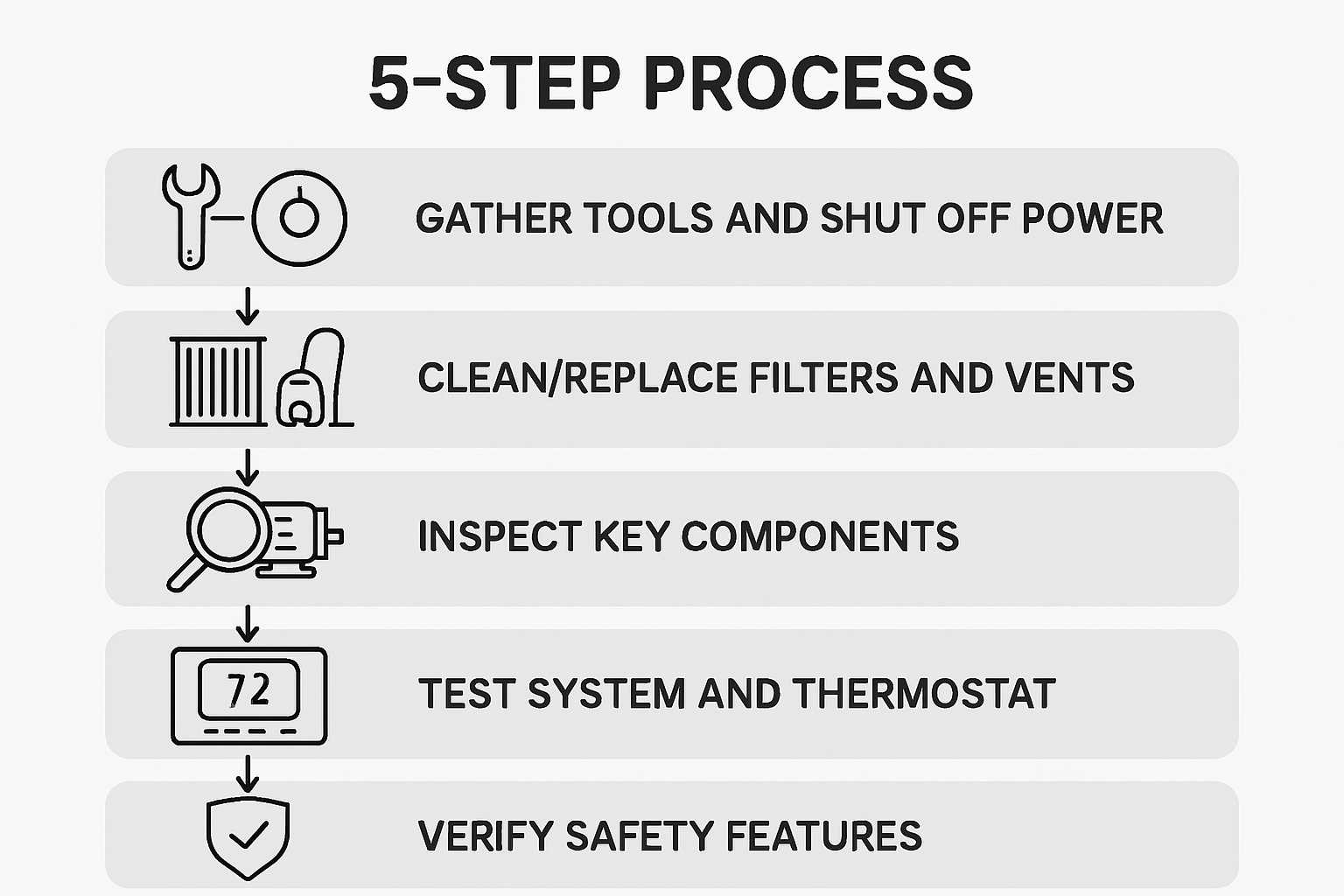
- Step 1: Gather Tools And Shut Off Power Safely
- Step 2: Clean Or Replace Air Filters And Vents
- Step 3: Inspect Key Components For Wear Or Damage
- Step 4: Test System Operation And Thermostat Settings
- Step 5: Verify Safety Features And Finalize Maintenance
Quick Summary
| Key Insight | Explanation |
|---|---|
| 1. Gather Tools and Ensure Safety | Collect essential tools and shut off power to prevent electrical hazards before performing maintenance on your heating system. |
| 2. Clean or Replace Air Filters Monthly | Inspect and maintain air filters every month to improve airflow and prevent system damage, ensuring optimal performance. |
| 3. Inspect System Components for Damage | Regularly check key components for wear and tear to avoid breakdowns and maintain reliable operation of your heating system. |
| 4. Test System Functionality | Verify that your heating system operates effectively and that thermostat settings are correct to enhance comfort and energy efficiency. |
| 5. Verify Safety Features | Ensure all safety controls and carbon monoxide detectors are functioning correctly to protect your home and family after maintenance. |
Step 1: Gather Tools and Shut Off Power Safely
Preparing for heating system maintenance requires careful planning and safety precautions. In this initial stage, you will collect the necessary tools and ensure electrical safety before beginning any work on your heating equipment.
First, gather a comprehensive toolkit that includes essential items like screwdrivers, wrenches, and a vacuum cleaner. Having these tools ready will streamline your maintenance process and help you work efficiently. Make sure your tools are in good condition and appropriate for the specific tasks you will perform.
The most critical safety step is to shut off the power supply to your heating system before starting any maintenance work. Locate your circuit breaker or disconnect switch and turn it off completely. This precaution prevents potential electrical hazards and protects you from accidental shock or injury. If you are uncertain about identifying the correct power source, consult your heating system’s manual or contact a professional technician.
A pro tip for your safety: Always use a voltage tester to confirm the power is fully disconnected before touching any electrical components. This extra step provides an additional layer of protection and gives you peace of mind while working on your heating system.
With your tools gathered and power safely shut off, you are now ready to proceed to the next stage of heating system maintenance.
Step 2: Clean or Replace Air Filters and Vents
Maintaining clean air filters is a crucial step in preserving your heating system’s efficiency and performance. Your goal in this stage is to inspect, clean, or replace the air filters to ensure optimal airflow and prevent potential equipment damage.
Inspect, clean, or change air filters once a month to keep your heating system running smoothly. Begin by locating the air filter compartment in your furnace or heating unit. Carefully remove the existing filter and check its condition. If the filter appears dirty, clogged, or worn, it is time for a replacement. When selecting a new filter, match the size and type exactly to your system’s specifications to guarantee proper fit and function.
To clean the air vents, use a vacuum with a soft brush attachment to remove dust and debris gently. Pay special attention to the vent covers and surrounding areas, ensuring no blockages restrict airflow. For a thorough cleaning, you can remove the vent covers and wash them with mild soap and water, allowing them to dry completely before reinstalling.
A pro tip for maintaining air quality: Consider using high efficiency particulate air (HEPA) filters that can trap smaller particles and improve overall indoor air circulation. These filters are especially beneficial for households with allergy sufferers or pets.
With clean filters and clear vents, your heating system is now primed for improved performance and energy efficiency.
Step 3: Inspect Key Components for Wear or Damage
Inspecting your heating system’s key components is a critical maintenance step that helps prevent unexpected breakdowns and ensures optimal performance. During this stage, you will carefully examine various mechanical and electrical elements to identify any signs of wear, damage, or potential future issues.
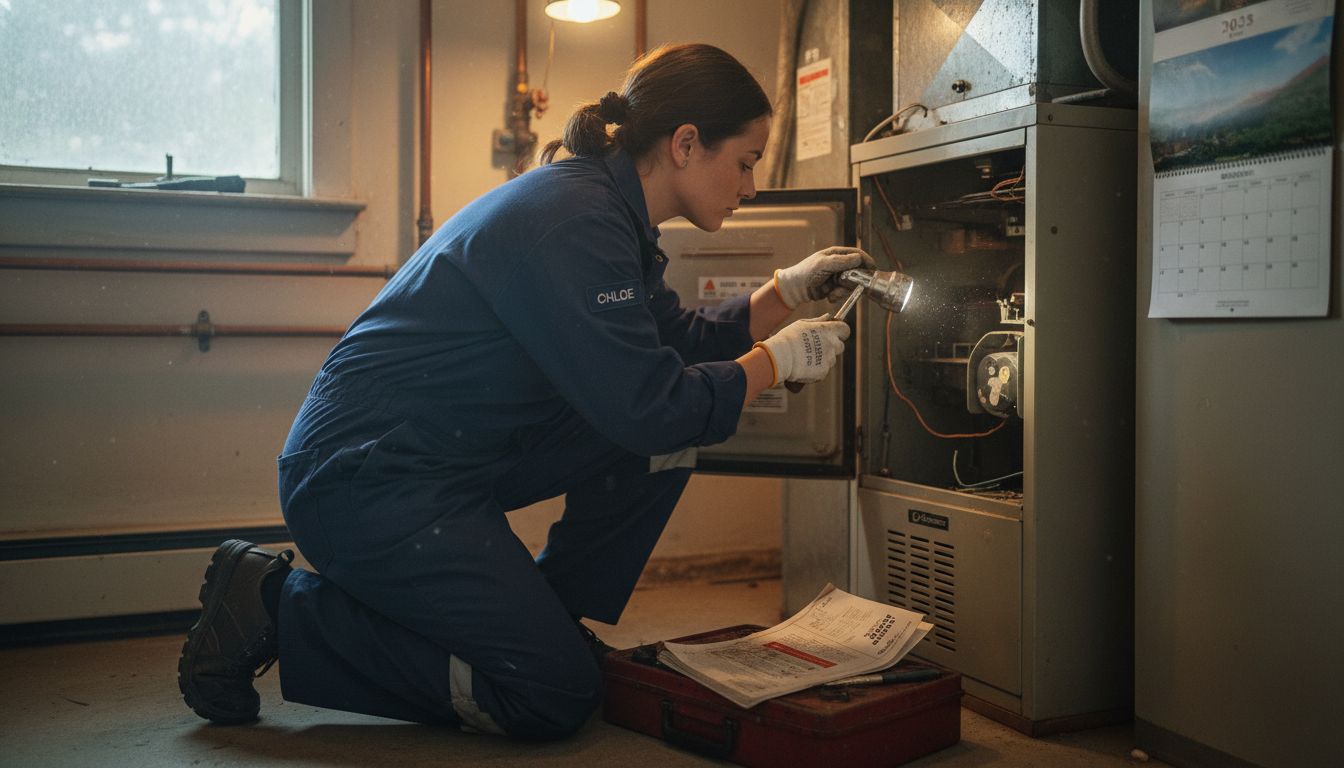
Tighten all electrical connections and measure voltage and current on motors as part of your comprehensive inspection. Start by visually examining the blower motor, belts, and pulleys for signs of wear such as cracks, fraying, or unusual stretching. Check that belt tensions are appropriate and look for any visible signs of deterioration. Gently rotate the blower wheel to ensure it moves smoothly without any grinding or unusual resistance.
Carefully inspect other critical components like heat exchangers, burners, and electrical terminals. Look for signs of corrosion, rust, or unusual discoloration that might indicate potential problems. Pay special attention to the combustion chamber for any signs of soot buildup or metal degradation, which could signal inefficient burning or potential safety hazards.
A pro tip for thorough inspection: Use a flashlight and wear protective gloves to help you see and safely touch components. If you notice any significant damage or are unsure about what you’re seeing, it is always best to consult a professional heating technician who can provide expert assessment.
With a careful component inspection complete, you are now ready to move forward in maintaining your heating system’s reliability and efficiency.
Step 4: Test System Operation and Thermostat Settings
With your heating system thoroughly cleaned and inspected, it is time to verify its operational performance and optimize your thermostat settings for maximum comfort and energy efficiency. This critical step ensures your system functions correctly and maintains an ideal indoor environment.
Check thermostat settings to ensure the cooling and heating system keeps you comfortable when you are home and saves energy while you are away. Begin by turning on your heating system and listening carefully for any unusual sounds during startup. Observe the initial performance closely, checking that warm air emerges consistently and without unexpected pauses or interruptions. Set your thermostat to a comfortable temperature and monitor how quickly and evenly the system heats your living space.
Carefully test different thermostat modes including heat, fan, and automatic settings to confirm each function operates smoothly. If you have a programmable thermostat, verify that scheduled temperature changes occur precisely as programmed. Pay attention to temperature accuracy by comparing the displayed temperature with a separate room thermometer to ensure calibration remains correct.
A pro tip for optimal performance: Consider investing in a smart thermostat that can learn your temperature preferences and automatically adjust for maximum energy savings. These advanced devices can significantly reduce your energy consumption while maintaining consistent comfort.
With your system tested and thermostat settings optimized, you have completed a comprehensive heating system maintenance routine that will help ensure reliable performance throughout the season.
Step 5: Verify Safety Features and Finalize Maintenance
As you approach the final stage of your heating system maintenance, your focus shifts to comprehensive safety verification and ensuring all systems are functioning optimally. This critical step will help protect your home and family while confirming the effectiveness of your maintenance efforts.
Check controls of the system to ensure proper and safe operation. Begin by examining all safety switches and emergency shut off mechanisms. Verify that carbon monoxide detectors are functioning correctly and have fresh batteries. Test the system startup cycle carefully, observing that it begins smoothly, operates consistently, and shuts down without any unexpected interruptions or unusual sounds.
Have a professional clean and check your heating system yearly to ensure comprehensive safety and maximum energy efficiency. While you have completed an excellent maintenance routine, an annual professional inspection can identify potential issues that might not be visible during a standard homeowner checkup. Pay close attention to any warning indicators on your system and document any observations that might require further professional investigation.
A pro tip for long term system health: Keep a maintenance log documenting each inspection, cleaning, and repair. This record can help you track your system performance, identify recurring issues, and provide valuable information for future maintenance or potential warranty claims.
With safety features verified and maintenance complete, your heating system is now prepared to provide reliable, efficient performance throughout the season.
Keep Your Heating System Running Smoothly with Expert Support
Heating system maintenance can feel overwhelming when faced with tasks like safely shutting off power, cleaning filters, inspecting components, and verifying safety features. The challenge lies in consistently managing these detailed steps to avoid unexpected breakdowns and maintain energy efficiency. If you want to protect your home’s comfort and avoid costly repairs or safety risks, reliable professional assistance is key. This guide highlights the importance of thorough care for your heating system’s longevity, efficiency, and safety.

Discover how MD Heating & Air: Heating Services & Maintenance Tips can empower you with trusted, local HVAC expertise in Greenville, SC. Our team excels at comprehensive heating maintenance, inspections, and repairs ensuring your system operates safely and efficiently all season long. Don’t wait for a failure to act. Visit MD Heating & Air today to schedule a free estimate or request prompt service that keeps your heating system reliable and your home comfortable when you need it most.
Frequently Asked Questions
How often should I inspect my heating system?
Inspect your heating system at least once a year to maintain its reliability and performance. Schedule this inspection before the heating season starts to ensure optimal function throughout the colder months.
What tools do I need for heating system maintenance?
Gather essential tools such as screwdrivers, wrenches, and a vacuum cleaner before starting maintenance. Having these tools ready will streamline your process and ensure you can perform necessary tasks efficiently.
How do I know if my air filters need to be replaced?
Check your air filters monthly for dirt, dust, and blockages. If a filter looks dirty or clogged, replace it to maintain proper airflow and system efficiency.
What should I do if I notice unusual sounds from my heating system?
If you hear unusual sounds, such as grinding or clanking, during system operation, it may indicate a potential issue. Immediately turn off the system and inspect for loose components or consult a professional technician for further evaluation.
How can I ensure the safety features of my heating system are working?
Verify the functionality of all safety features by testing the system’s startup cycle and checking safety switches. Ensure that carbon monoxide detectors are operational and have fresh batteries to protect your home and family.
What are the benefits of using a smart thermostat for heating?
A smart thermostat can learn your heating preferences and automatically adjust to optimize energy savings while maximizing comfort. Consider programming it to change settings based on your daily routine, potentially reducing energy consumption by up to 20%.