Ductless AC vs. Central Air: Disadvantages & Cost Breakdown
Ductless AC—often called ductless mini‑splits—are compact heat‑pump systems that move refrigerant between an outdoor compressor and one or more indoor air‑handlers to cool or heat specific rooms. If you’re weighing ductless against central air in Greenville, SC, the decision usually comes down to energy use, upfront versus lifetime cost, and whether your home already has usable ductwork or would need a retrofit. This guide lays out how mini‑splits work, their core features, a head‑to‑head comparison with ducted systems, and practical cost and climate advice for Greenville homeowners. You’ll get clear pros and cons, sizing and zoning tips, and real‑world examples of when ductless systems beat central air—especially in older houses, additions, or rooms that never seem to get comfortable. We’ll also explain local installation factors, typical Greenville price ranges, and when it’s time to call a qualified contractor for sizing, incentives, or financing so you can pick the right option for comfort, efficiency, and long‑term savings.
What Is a Ductless Mini Split and How Does It Work?
A ductless mini‑split is a heating and cooling system made of an outdoor compressor and one or more indoor air handlers connected by a refrigerant line set—no ductwork required. Refrigerant circulates between the outdoor unit and the indoor heads; modern systems use inverter (variable‑speed) compressors that adjust output to match demand, which boosts efficiency and keeps temperatures steady. Without ducts you avoid transmission losses and leaks that often cut efficiency in ducted systems. Because each indoor unit can be controlled separately, you only condition occupied spaces, which lowers run time and energy use.
Ductless Mini‑Split HVAC System Overview
A typical ductless mini‑split heat‑pump system pairs an outdoor unit with one or more indoor units connected by a conduit carrying refrigerant lines and wiring. Indoor units—mounted on walls or ceilings—use a fan and coil to move conditioned air into the room, while the outdoor unit houses the compressor and condenser that reject heat outside.
A review of ductless mini split HVAC system, N Fumo, 2022
What Are the Key Features of Ductless Mini Split Systems?
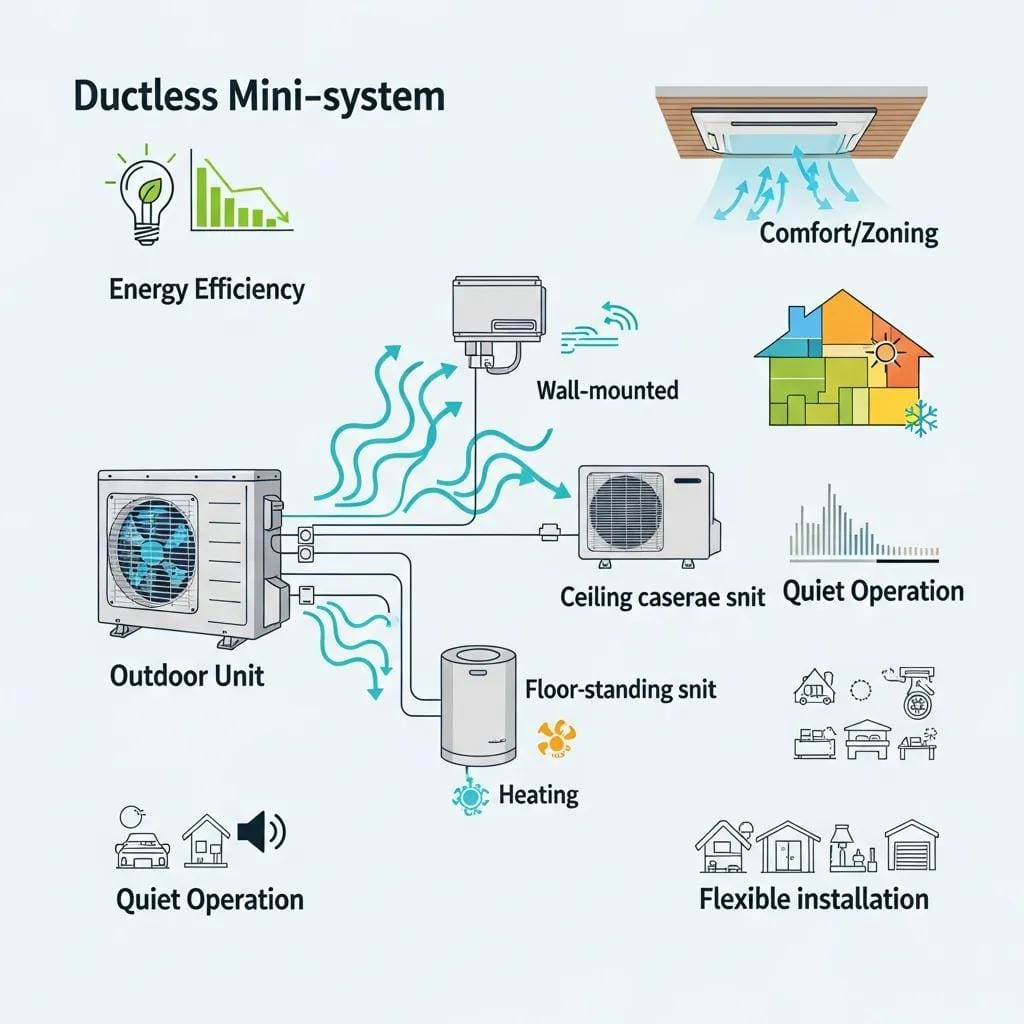
Mini‑splits bring together features that matter to homeowners: inverter compressors that vary capacity for better part‑load efficiency and fewer on/off cycles; indoor heads available as wall‑mounted, cassette, or floor units; and multi‑zone setups that connect several indoor units to one outdoor compressor. Many models offer improved filtration and whisper‑quiet indoor operation, which helps both comfort and indoor air quality.
Next, we’ll explain why those features often make ductless systems a smart efficiency and comfort choice for Greenville homes.
Why Are Ductless Mini Splits Ideal for Greenville Homes and Older Buildings?
Mini‑splits are a great fit for Greenville homes without ductwork, for additions or sunrooms, and for rooms that suffer from persistent hot or cold spots. Installing a mini‑split avoids the expense and disruption of running ducts through finished ceilings and walls, so retrofits are faster and less invasive. During Greenville’s hot, humid summers, properly sized mini‑splits with variable‑speed compressors hold temperature and remove moisture more steadily than systems that short‑cycle. Homeowners often choose mini‑splits for targeted upgrades—bedrooms, home offices, or finished basements—because they deliver efficient comfort with a small installation footprint.
A quick note on service: MD Heating & Air Conditioning installs and maintains ductless mini‑splits with NATE‑certified technicians, transparent pricing, free estimates, and financing for qualifying projects.
What Are the Advantages of Choosing Ductless AC Over Central Air?
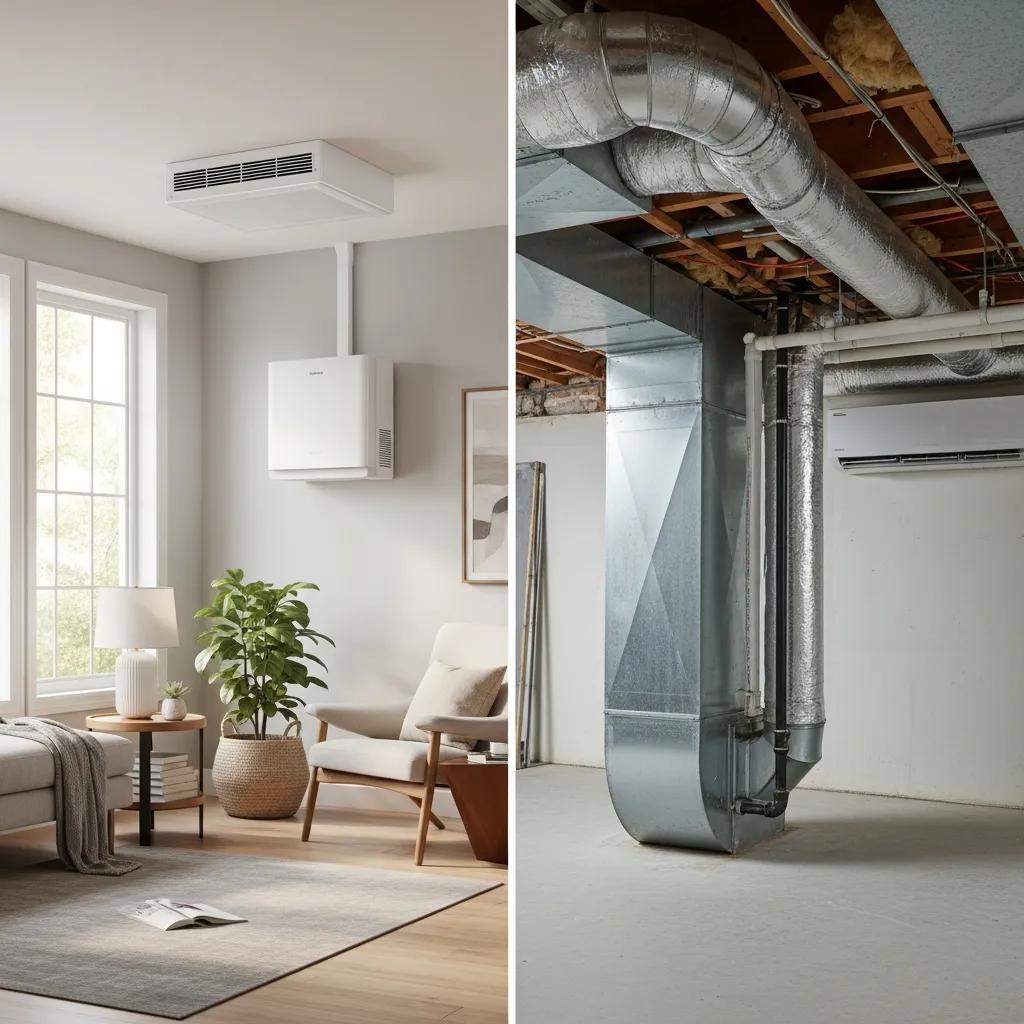
For many Greenville homeowners, ductless systems offer distinct advantages: better zoned efficiency, quicker response to set‑point changes, and less invasive installation when ducts don’t exist. Without duct losses and with inverter compressors, mini‑splits can deliver higher real‑world efficiency in zoned applications. Because you only cool or heat occupied rooms, run time drops and monthly bills often follow. And installation is typically simpler and less disruptive than adding ductwork.
They also improve comfort directly—faster temperature control, quieter indoor operation, and filtration at each indoor unit—making them ideal for bedrooms, additions, or accessory units.
Ductless systems deliver three main homeowner benefits:
- Higher zoned efficiency: Conditioned air goes straight to the room you’re using, avoiding duct transmission losses.
- Flexible installation: Multiple indoor styles adapt to retrofit constraints with minimal disruption.
- Individual comfort control: Each zone has its own controller, so everyone can set their preferred schedule and temperature.
Those points lead into the technical reasons ductless systems often save energy versus central air.
Variable‑Speed Ductless vs. Single‑Speed Ducted Heat Pumps
This comparison looks at performance differences between variable‑speed ductless heat pumps and traditional single‑speed ducted heat pumps, focusing on how variable‑speed components and fans affect overall efficiency and comfort.
Performance comparisons for variable‑speed ductless and single‑speed ducted residential heat pumps, H Cheung, 2014
What Are the Disadvantages and Cost Considerations of Ductless AC vs. Central Air?
Mini‑splits do have trade‑offs: higher upfront cost per zone, visible indoor heads that some homeowners find less discreet than vents, and routine filter and condensate drain upkeep for each indoor unit. While ductless systems can be more efficient in zoned use, a single central system may be the more economical choice for whole‑home cooling when good ductwork already exists. Service patterns differ too—mini‑splits need attention at each indoor head and line set, while central systems concentrate service at the air handler and coil.
Installation costs depend on the number of zones, mounting complexity, required electrical upgrades, and wall penetrations. Incentives—like federal tax credits for qualifying heat‑pump equipment—can reduce the net cost.
Below is a quick reference table showing typical local cost drivers and estimated ranges to help you compare options.
This table illustrates how scope and existing duct condition drive price. Next we cover aesthetic and maintenance trade‑offs.
How Does the Installation Cost of Ductless AC Compare to Central Air in Greenville, SC?
Costs vary by project and whether ducts are already in place. For a single‑room solution, a ductless unit plus installation often costs less than installing full ductwork and a central system. But if your home already has well‑sealed ducts and a compatible air handler, upgrading or replacing a central system typically has a lower marginal cost per square foot. Federal incentives for qualifying heat pumps can lower the effective price of ductless heat‑pump installs when requirements are met. Financing can also spread payments and make higher‑efficiency choices more affordable.
Main cost drivers include the number of indoor units, mounting complexity (wall or ceiling), electrical work, and the condition of existing ducts. Comparing lifecycle costs, not just the sticker price, gives a clearer picture.
What Are the Aesthetic and Maintenance Challenges of Ductless Mini Splits?
Indoor mini‑split heads are visible and need thoughtful placement so airflow and room design work together—some homeowners prefer recessed or low‑profile units to reduce visual impact. Regular maintenance includes cleaning indoor filters, checking condensate drains, and scheduling professional service for refrigerant and system checks. Multiple indoor units mean more service access points than a single central air handler, which can add a bit of routine maintenance time. Still, careful placement and regular cleaning minimize both aesthetic and upkeep concerns.
Routine care and professional inspections preserve efficiency and help stop small issues from turning into major repairs. Next, we’ll contrast central air’s whole‑home performance and suitability.
How Does Central Air Conditioning Compare to Ductless AC in Performance and Suitability?
Central air works well for whole‑home conditioning when a house already has well‑designed, sealed ductwork. It delivers uniform temperatures, integrates easily with whole‑home filtration, humidification, and ventilation accessories, and keeps equipment largely out of sight—an aesthetic plus for many homeowners. For large open plans or single‑level homes, a central system offers simple, single‑thermostat control and minimal visible hardware.
Central systems’ main drawbacks are duct transmission losses, limited room‑by‑room zoning without added dampers or multiple systems, and disruptive retrofits when ducts must be added. Leaky or poorly insulated ducts—especially in attics or crawlspaces—can cut delivered efficiency significantly. The table below summarizes how the systems typically perform by attribute.
System suitability depends on home type and retrofit constraints; next we highlight central air’s benefits for whole‑home cooling.
What Are the Benefits of Central Air for Whole‑Home Cooling?
Central air gives consistent temperatures across the house through a single distribution network, simplifying thermostat management and allowing centralized filtration and HVAC accessories. When ducts are correctly sized, sealed, and insulated, a central system can condition large areas efficiently and support add‑on features like whole‑home humidifiers or advanced filters. Homeowners who want hidden equipment and a cleaner aesthetic often prefer central systems, and when ducts are already in good shape, the marginal cost to cool additional square footage is usually lower.
That centralized model highlights the limitations around energy loss and zoning retrofits discussed next.
What Are the Limitations of Central Air Regarding Energy Efficiency and Zoned Control?
Central systems usually operate as one zone and therefore condition the entire ducted volume even when only part of the home is occupied, which lowers part‑load efficiency. Duct leakage and conduction—particularly in unconditioned attics or crawlspaces—can materially reduce system performance. Adding zoning to a ducted system requires motorized dampers, extra controls, or multiple systems, which increases cost and complexity. In older Greenville homes that lack ducts, retrofitting central air means invasive construction and higher labor compared with installing ductless heads.
Understanding these limits helps you decide whether to repair and seal ducts, add zoning, or opt for targeted ductless solutions. Below we map common home scenarios to recommended systems.
This table reinforces that the best choice depends on layout, existing ducts, and your priorities.
Which AC System Is Best for Your Greenville, SC Home?
The right system depends on house size, floorplan, existing ductwork, budget, and Greenville’s humid climate. Small to mid‑sized homes with good ducts often get the most value from a ducted central system. Homes without ducts, houses with additions, or properties with stubborn hot spots usually benefit most from ductless mini‑splits. Hybrid setups—central air for primary spaces plus ductless heads for problem areas—are a practical compromise that balances cost, comfort, and efficiency.
Use this quick decision map to match common Greenville scenarios with recommended systems.
This mapping clarifies common choices; next, consider how Greenville’s climate affects sizing and performance.
How Do Home Size, Layout, and Existing Ductwork Influence Your Choice?
Home size and layout determine whether one central unit or several ductless heads will deliver even comfort. Multi‑story homes often see temperature stratification, where zone control on certain floors or rooms can be especially helpful. If ducts are well sealed and insulated, central air is often the more economical whole‑home option; if ducts are leaky or missing, ductless becomes compelling. Hybrid systems allow phased upgrades—install ductless heads where you need them now and repair or add ducts later as budget allows.
Next we cover climate‑specific effects for Greenville.
How Does Greenville’s Climate Affect Ductless vs. Central Air Performance?
Greenville’s hot, humid summers make dehumidification as important as cooling. Variable‑speed compressors on ductless heat‑pump mini‑splits run longer at lower capacity, which improves moisture removal and steadier indoor humidity. Central systems with correctly sized coils and variable‑speed air handlers also dehumidify well. In humid climates, correct sizing and balanced airflow are critical for both system types to avoid short cycling and inadequate moisture control. Proper insulation, duct sealing, and airflow tuning matter no matter which system you choose.
With those homeowner factors covered, the next section explains how to choose a contractor and what to expect from service.
Why Choose MD Heating & Air Conditioning for Your Ductless or Central AC Installation?
MD Heating & Air Conditioning is a local Greenville HVAC team that helps homeowners pick and install ductless mini‑splits or central systems with a consultative, no‑pressure approach. Our NATE‑certified technicians size systems correctly, follow best practices during installation, and aim to maximize efficiency and equipment life. We provide transparent pricing, free on‑site estimates, and financing options to reduce upfront cost barriers. We also help customers navigate federal tax‑credit opportunities and identify qualifying energy‑efficient equipment.
MD Heating & Air Conditioning focuses on customer‑centered service, 24/7 emergency support, and clear project communication so you won’t be surprised during installation. Our local experience with Greenville’s climate and housing types helps us recommend the right solution—whether that’s a single‑zone mini‑split for a sunroom or a packaged central system for a ducted home. Request a quote or schedule an estimate to review options, incentives, and financing tailored to your project.
Heat Pumps for Residential Heating and Cooling: GHG Emissions and Incentives
Air‑source and ground‑source heat pumps can reduce greenhouse‑gas emissions compared with fossil fuel systems. This study analyzes how federal and state tax incentives influence the adoption of ground‑ and air‑source heat pumps as a climate policy tool.
Air Source and Ground Source Heat Pumps: A Comparison and Analysis of the Effects of US Federal and New York Tax Incentives in the Adoption of Both Systems, 2025
What Makes MD Heating & Air’s NATE‑Certified Technicians the Best Choice?
NATE certification shows technicians have passed industry‑standard exams and demonstrated hands‑on HVAC skills—this translates to more accurate sizing, cleaner installation, and fewer callbacks. Technicians who follow best practices reduce the risk of refrigerant problems, airflow issues, and improper charge that can hurt efficiency. Our local technicians combine certification with Greenville‑specific experience to match equipment to home layout and climate needs. Quality installations also help protect manufacturer warranties and extend expected system life.
That technician expertise pairs with financing and incentive help to lower net ownership cost.
How Can You Benefit from Financing, Free Estimates, and Federal Tax Credits?
We offer free on‑site estimates so you understand equipment options, scope, and price before you commit. Financing options let you spread payments and make high‑efficiency equipment more accessible. For qualifying installs, homeowners may be eligible for federal incentives—like tax credits for energy‑efficient heat pumps—depending on current program rules and equipment specs. MD Heating & Air can clarify eligibility during the estimate and advise on documentation to support any tax‑credit claims.
With a clear estimate and financing plan, you can balance upfront cost against long‑term operating savings when deciding on a system.
What Are the Most Common Questions About Ductless AC vs. Central Air?
Here are short answers to frequent homeowner questions to highlight key decision points and common concerns.
- Are ductless mini‑splits more energy‑efficient than central air?
Often, yes—especially for zoned use. Mini‑splits avoid duct losses and use inverter compressors to match output to load. Real‑world savings depend on occupancy patterns, existing duct condition, and correct sizing. - How much does ductless AC installation cost in Greenville, SC?
Local ranges vary by system size: single‑zone installs typically start in the low thousands; multi‑zone systems usually fall in the mid‑to‑high thousands. Major cost drivers are the number of indoor units, mounting complexity, and any required electrical upgrades. - What are the main disadvantages of ductless AC and central air?
Ductless drawbacks include higher per‑zone upfront cost and visible indoor heads. Central‑air drawbacks include duct losses and disruptive retrofits when ducts are missing or in poor condition.
Below are practical checklists and steps to help prioritize decisions and prepare for an estimate.
- Top criteria to evaluate when choosing a system:
Existing ductwork condition: Inspect for leaks and insulation.
Number of rooms to condition: Count zones versus whole‑home needs.
Budget and lifecycle cost: Compare upfront price against operating expenses.
Aesthetic preferences: Decide how visible indoor heads will fit your rooms. - Steps to prepare for an installation estimate:
Document current HVAC equipment and model numbers.
Note rooms with comfort issues and typical occupancy.
Identify available electrical capacity and panel access.
Schedule a free on‑site assessment with a qualified installer. - Ways to maximize efficiency regardless of system:
Seal and insulate ducts and attic penetrations.
Use programmable schedules or zone controls.
Keep up regular professional servicing and filter cleaning.
Consider variable‑speed equipment and ENERGY STAR models.
These lists outline practical steps homeowners can take now to improve performance and prepare for a professional assessment.
This table reinforces actionable next steps and prepares homeowners for the estimate process.
For professional guidance on system selection, incentives, or to request a no‑cost estimate, contact MD Heating & Air Conditioning to schedule an on‑site consultation and discuss financing or potential federal tax‑credit eligibility.
Frequently Asked Questions
1. How do ductless mini‑splits perform in extreme weather conditions?
Ductless mini‑splits are built to work across a wide temperature range. Many models use inverter technology to ramp output up or down as conditions change, keeping comfort steady. Some heat‑pump mini‑splits maintain heating performance at low outdoor temperatures, making them viable year‑round in many climates. Always choose a model rated for Greenville’s conditions to get the best performance and efficiency.
2. Can ductless mini‑splits improve indoor air quality?
Yes. Many systems include advanced filtration that captures dust, pollen, and other particles, which helps indoor air quality. Because mini‑splits don’t rely on ductwork, they avoid the dust and mold buildup that can occur inside ducts. Regular filter cleaning and scheduled maintenance keep the air you breathe cleaner.
3. What is the lifespan of a ductless mini‑split system?
With proper installation and routine maintenance, a ductless mini‑split typically lasts 15–20 years. Factors like usage patterns, maintenance frequency, and installation quality all influence longevity. Choosing a reputable installer and following a regular service schedule helps protect your investment.
4. Are there any tax incentives for installing ductless mini‑splits?
Possibly. Homeowners may qualify for federal tax credits or local incentives for installing energy‑efficient ductless heat pumps. Programs change over time, so check current eligibility rules with the IRS, local utilities, or your installer to see what applies to your project.
5. How noisy are ductless mini‑split systems compared to central air systems?
Indoor mini‑split units are generally quieter than traditional central systems—their operating noise is often described as a whisper at low settings. Central systems can be noisier due to the air handler and duct airflow. When noise matters, look for models with sound‑dampening features and check manufacturer sound ratings.
6. Can ductless mini‑splits be used for both heating and cooling?
Yes. Many mini‑splits are heat pumps that reverse the refrigeration cycle to provide heat in colder months and cooling in warmer months. That dual function makes them a year‑round solution for many Greenville homes. Confirm the unit’s heating rating for your climate when choosing equipment.
7. What maintenance is required for ductless mini‑split systems?
Maintenance is straightforward but important. Clean or replace air filters every 1–3 months depending on use, keep the outdoor unit free of debris, and schedule professional service at least once a year to check refrigerant, clean coils, and inspect components. Regular care keeps the system efficient and extends its life.
Conclusion
Ductless mini‑splits offer clear advantages—zoned efficiency, flexible installation, and personalized comfort—that make them an excellent choice for many Greenville homes, especially older houses, additions, and rooms with persistent hot spots. This guide covered the trade‑offs and practical steps to help you choose the right system. For a smooth upgrade and a system sized to your home, reach out to a qualified HVAC professional. Contact MD Heating & Air Conditioning to schedule an on‑site estimate and explore options that fit your comfort needs and budget.